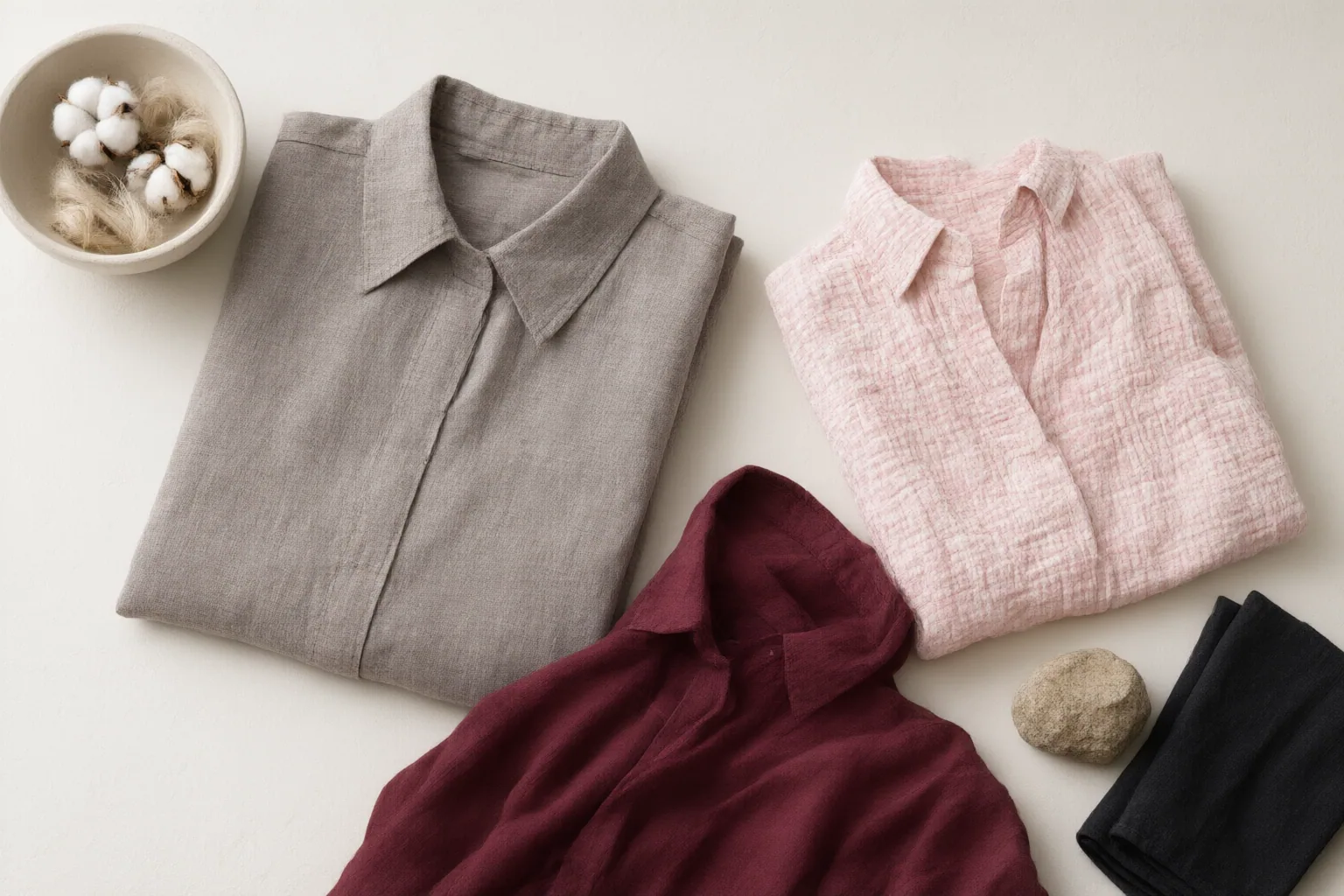
Choose a hot-weather shirt by examining its construction and intended use, not merely its fiber label. Compare weave density, weight, texture, fit, airflow, moisture behavior, hand feel, and care needs together.
Start With Airflow, Weight, and Construction
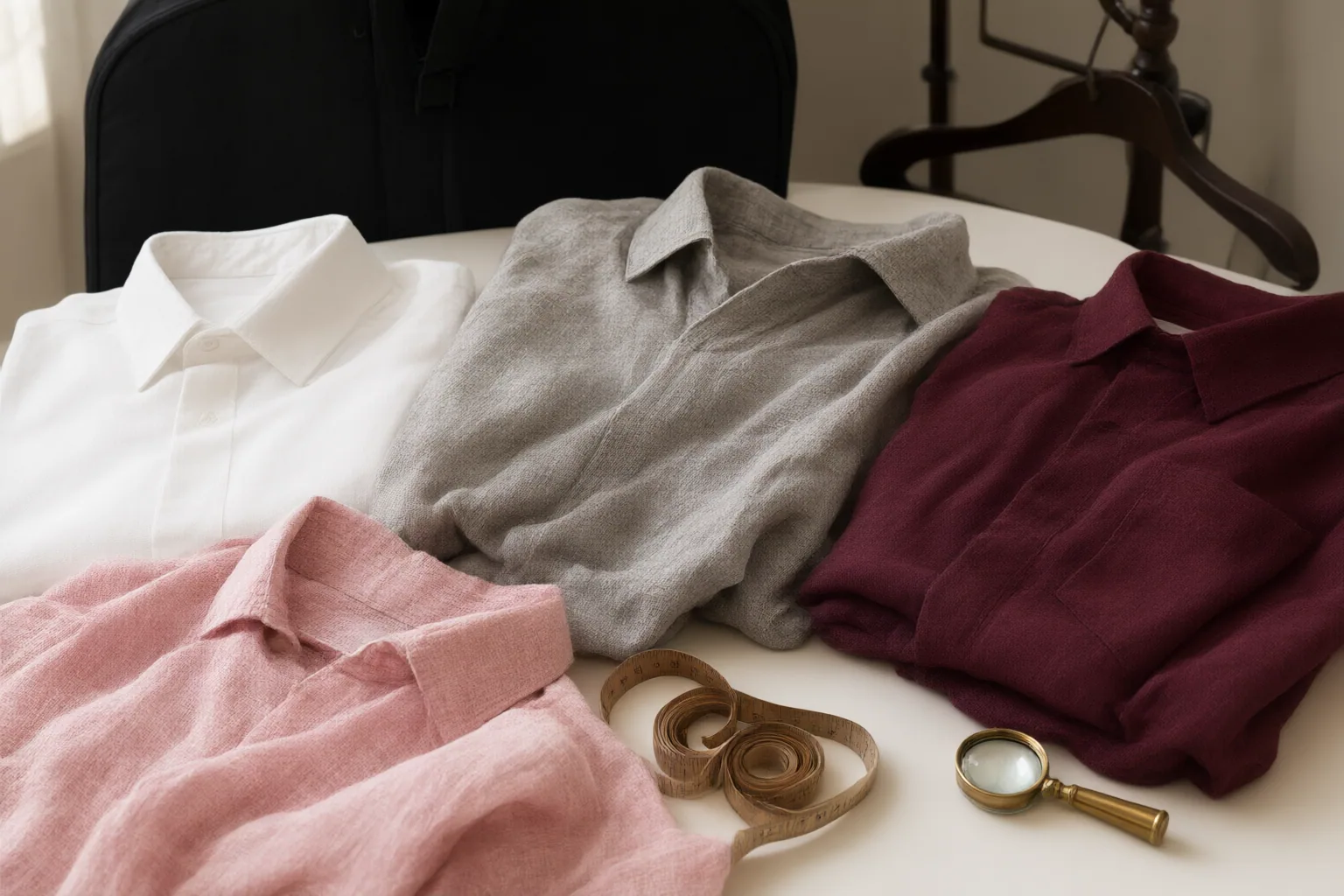
Breathability describes airflow through a garment. The Modest Man says tighter, denser weaves are generally less breathable, while The Modest Man and SophiasStyle associate lightweight, more open constructions with better airflow. However, a fabric name does not guarantee a specific result.
Global Fabric Wholesale lists shirting fabrics from 90 to 220 gsm, showing how widely weight can vary across the category. It describes poplin as a tight plain weave with a crisp finish and Oxford cloth as a more textured option, but neither name alone determines hot-weather comfort. Assess the actual shirt’s weight, weave density, drape, and hand feel rather than assuming every version of a familiar fabric will perform identically.
Match Moisture Behavior to How You Sweat
Airflow, absorption, wicking, moisture retention, and drying speed are separate properties. A shirt can admit air yet still become clammy or display sweat if its fabric absorbs and holds moisture. The Modest Man, for example, describes cotton as potentially breathable and lightweight but moisture-absorbing rather than moisture-wicking.
Avoid treating cotton, linen, rayon, or a blend as automatically superior. The supplied sources do not establish universal performance for every construction, and their descriptions of some fibers’ moisture behavior differ. Instead, consider how much you expect to sweat, whether retained dampness bothers you, and whether the specific fabric is presented as absorbing or moving moisture. When that information is unavailable, rely on construction details without assuming a fiber name proves quick drying or wicking.
Choose Fit and Texture for the Intended Use
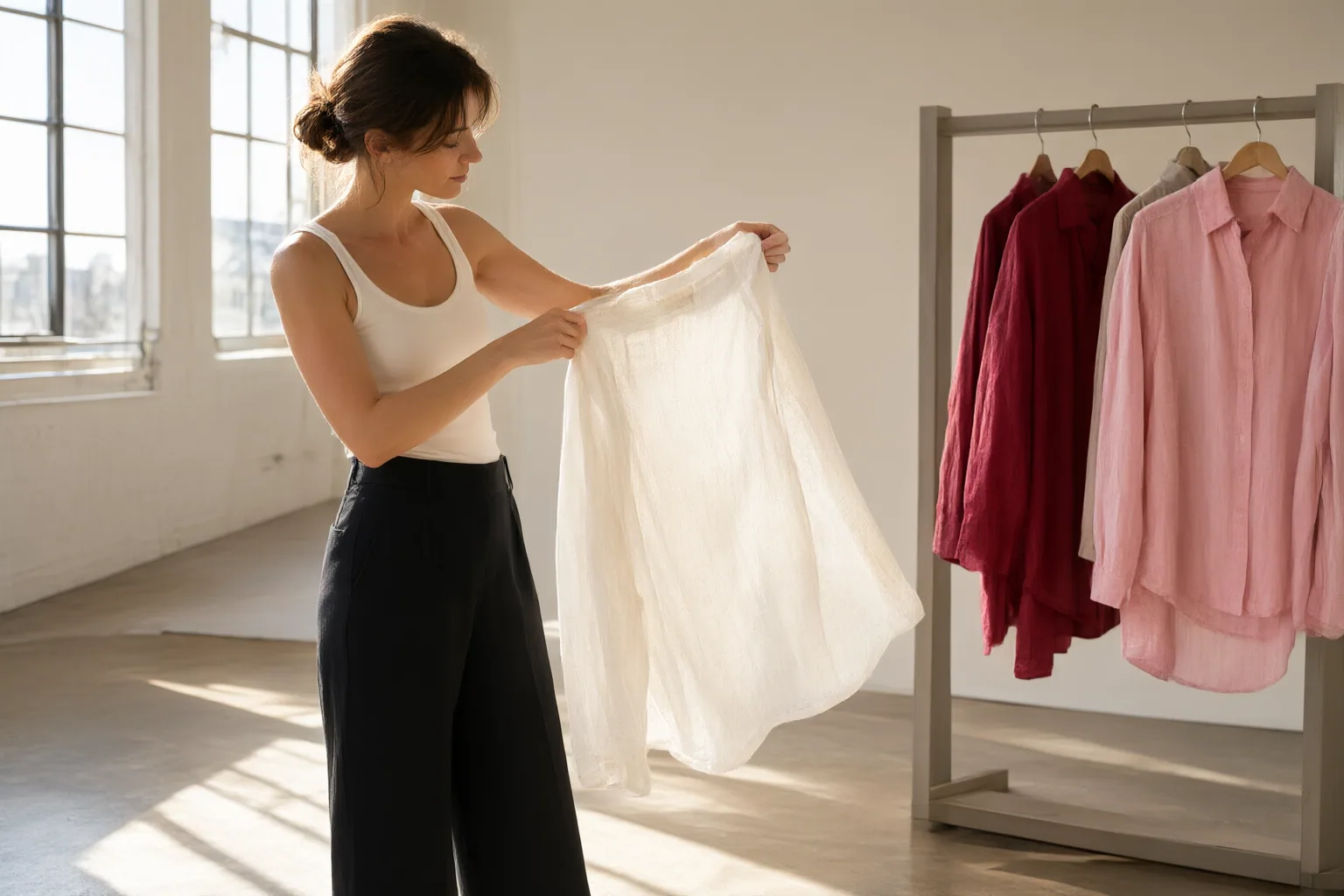
Fit changes how fabric interacts with heat and perspiration. The Modest Man says a looser cut can help a breathable, non-wicking shirt feel cooler by supporting airflow. A fabric intended to wick moisture generally needs closer contact with the skin to move moisture effectively.
Texture matters too. Seersucker and piqué constructions can reduce cling and create more space for air around the skin. For lower-sweat situations, consider a loose shirt that combines low weight with an open or textured construction. If moisture movement is the priority, evaluate whether the material is designed for wicking and whether the fit provides sufficient skin contact. In either case, avoid choosing an extremely close or oversized fit without considering how that choice affects the fabric’s intended behavior.
Conclusion
Use a layered checklist before purchasing:
- Read the fiber composition, but treat it as a starting point.
- Inspect whether the weave appears open or dense.
- Compare weight, drape, hand feel, and desired structure.
- Look for texture that may limit cling.
- Match a loose or closer fit to the fabric’s moisture behavior.
- Distinguish absorption from wicking and consider retained dampness and drying needs.
- Review care requirements alongside wrinkle and structure tradeoffs.
No single material is universally best because shirts within the same fiber family can differ in weave, weight, texture, and fit. Before buying, inspect the actual shirt or its available construction details and check every item above against where, how, and how long you expect to wear it.
Disclosures and limitations
- This article was prepared with AI assistance from the supplied editorial and commercial sources. Their performance guidance was synthesized with attribution and was not independently laboratory-tested.
- No structured products, prices, ratings, or inventory were supplied. Any future shopping links should disclose possible affiliate relationships and independently verify commercial details.
Related reading
Sources
- Robot or human? — walmart.com
- Sada Grangers Clothing Care Kit – SKLADEM | Hudy.cz — Hudy.cz
- An In-Depth Guide to Breathable Summer Fabrics % % — The Modest Man
- Shirt Fabric by the Yard | Free Samples Available — Global Fabric Wholesale
- On-line catalog | ROBEX DK s.r.o. — ROBEX DK, s.r.o.
- The Best Fabrics for Staying Cool in Hot Weather — SophiasStyle.com
- Women's medical scrubs sets for nurse, doctors – Uniformshop — uniformshop.eu
- mens moisture wicking shirts sold on Temu United States — temu