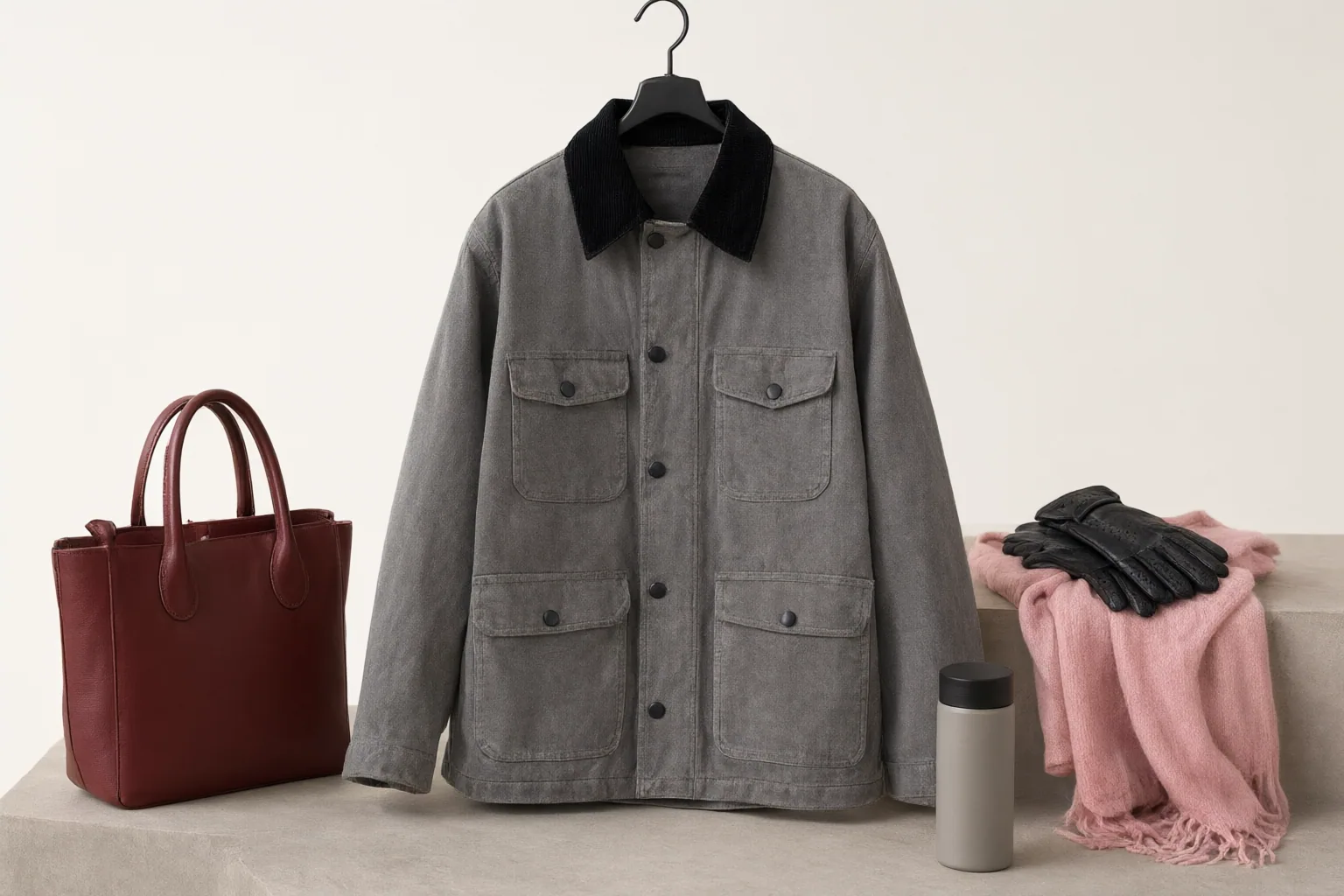
A barn jacket can be practical for commuting and weekend errands because its relaxed shape supports layering, its typical hip-length cut adds coverage, and its pockets provide useful storage. For transitional weather, however, fabric, lining, fit, pocket security, and model-specific performance matter more than the category name alone.
Why the Barn Jacket Works for Everyday Wear
The barn jacket combines workwear-derived utility with a shape that fashion sources describe as adaptable for everyday outfits. Common features include a relaxed or boxy silhouette, hip-length coverage, multiple pockets, button or snap closures, a contrasting corduroy or leather collar, and durable cotton, canvas, or waxed fabric.
That combination can suit a commute followed by errands: the silhouette may accommodate changing layers, while exterior pockets can hold small essentials. Pocket usefulness still depends on their actual dimensions and closures. Likewise, a rugged appearance does not establish water resistance, wind resistance, or warmth; those qualities must be confirmed for the individual jacket.
Choose the Right Fabric and Lining for Changing Weather
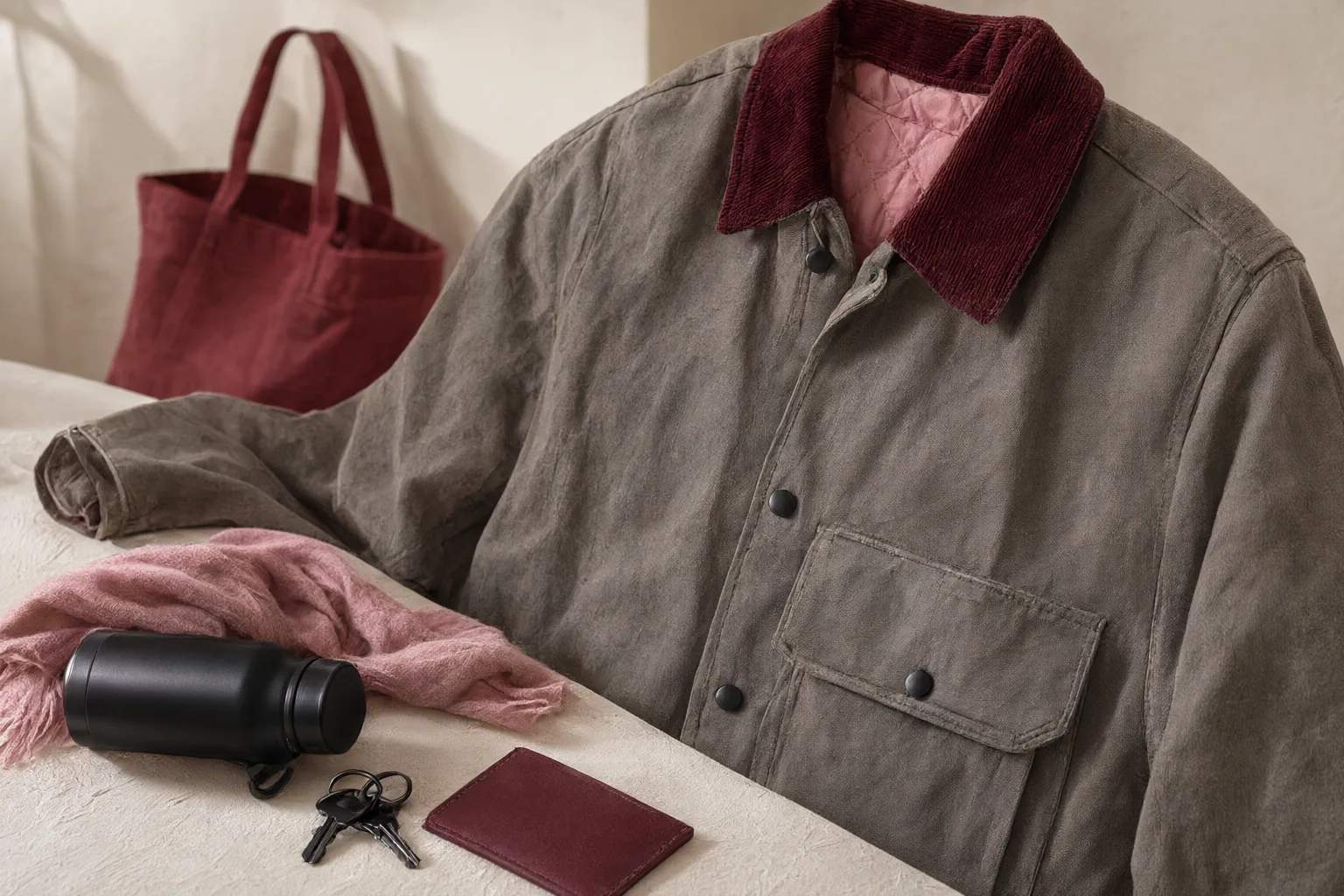
Start with the conditions in which you expect to wear the jacket. Waxed cotton is the more weather-protective traditional option identified by the sources, while ordinary canvas is sturdy but generally offers less protection from weather. Do not assume every waxed or canvas jacket performs identically: consult the current product specifications for explicit water- or wind-resistance claims.
Next, choose the insulation level. Quilted construction or fleece lining adds warmth, making it more suitable for cooler conditions. Unlined or lighter cotton versions work better as transitional layers than as winter coats and may offer a broader layering range when temperatures fluctuate.
Care can also determine practicality. One cited unwaxed canvas option is described as normally washable, whereas Ariat directs owners of its quilted twill model to wash it separately on a cold, delicate cycle and avoid ironing and dry cleaning. Treat those as model-specific examples and review the care label before buying or washing any jacket.
Check Fit, Length, Pockets, and Styling Versatility
Use your normal layers when assessing fit. The shoulders and sleeves should leave room for a sweater or hoodie without creating more volume than you want. Compare garment measurements rather than relying only on a relaxed-fit label.
Length changes both function and appearance. The classic hip-length shape balances coverage with everyday versatility, while cropped or longer variations can alter layering capacity, coverage, and outfit proportions. Check where the hem falls on your body and whether it remains comfortable while sitting or moving through a commute.
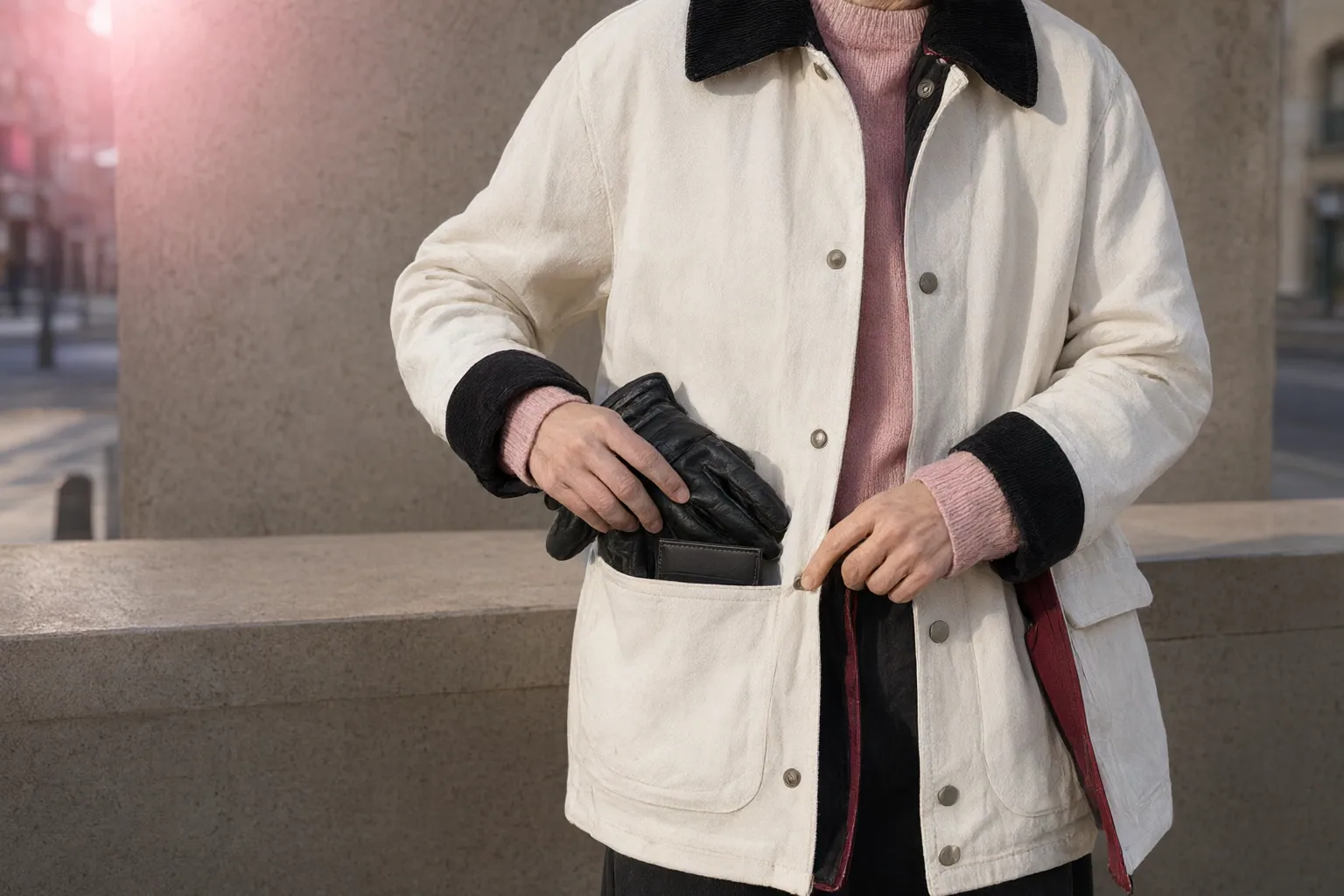
Inspect the pockets for size, placement, and security. Large hand or exterior pockets recur across the style, but the sources do not establish that every version can securely carry a phone, wallet, keys, or transit card. Compare the dimensions and closure design with what you actually carry.
For a more polished commute or office outfit, cited styling guidance combines barn jackets with tailored trousers, skirts, flats, and other refined pieces. Jeans, sweaters, scarves, sneakers, or boots shift the same general silhouette toward errands, parks, and casual weekends.
Conclusion
A barn jacket is most useful for someone who wants one casual outer layer to bridge workday travel, errands, and changing temperatures. Its practicality depends on choosing the right construction rather than simply adopting the style. Before purchasing, compare the jacket’s measurements and specifications with your usual layers, local weather, daily carry needs, and preferred care routine.
Disclosures and limitations
- This article was prepared with AI assistance using only the supplied research package and its cited source IDs.
- No specific products or affiliate offers are recommended here. If commerce links are added later, their affiliate nature should be disclosed and current specifications independently verified.
Related reading
Sources
- Custom Barn Jacket Manufacturer for USA Brands – WEARLETS — WEARLETS
- 7 Stylish Ways to Wear a Barn Jacket This Fall — Vogue
- Hailey Bieber and Our Editors Agree—This Is the One Fall Jacket You Need — Glamour
- Six Ways to Style This Fall’s Biggest Coat Trend — Harper's BAZAAR
- Grizzly Quilted Barn Jacket — Ariat International
- The Barn Jacket Is The ‘It Coat’ This Fall—Here Are 6 Stylist-Approved Favorites — Women's Health
- The Barn Jacket Is a Top Spring 2024 Trend for Transitional Dressing — Here’s How to Wear the Heritage Style — WWD