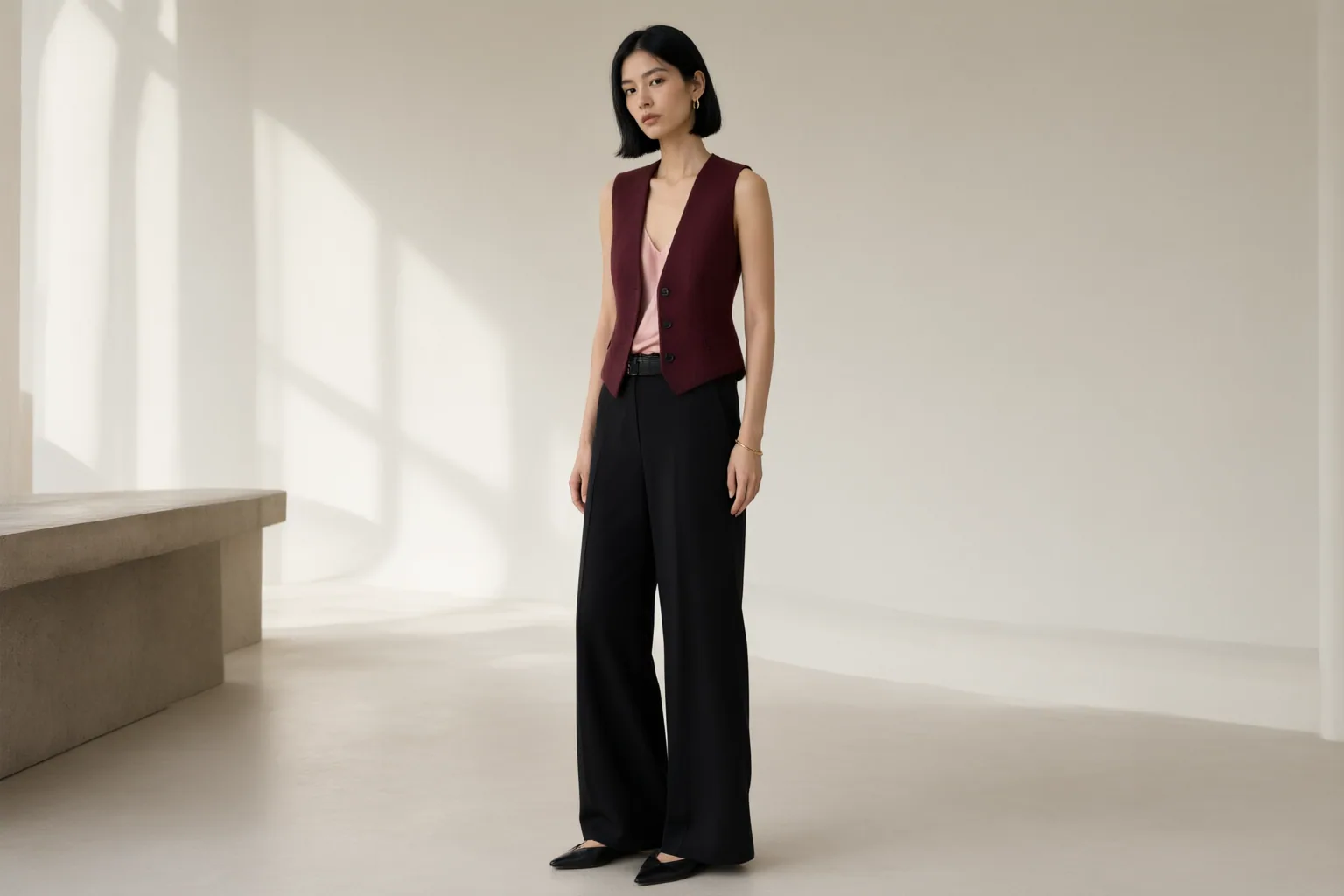
A waistcoat can work across polished, professional, and relaxed outfits when you adjust four variables: fit, coverage, proportion, and fabric. Start with a close but comfortable shape, then choose streamlined layers and bottoms that balance its length and structure.
Wear It as a Top: Prioritize Fit, Coverage, and Balance
When a waistcoat replaces a shirt, look for a body-following fit that lies flat without pulling at the buttons or gaping. Check the neckline and armholes from several angles before deciding whether the coverage suits the occasion. A seamless tank or similarly smooth base layer can add coverage without substantially changing the silhouette. Styling guides describe a deeper V-neck as dressier and a higher neckline as more casual.
Build balance below the waist with high-waisted trousers, straight-leg jeans, or a structured skirt. A fitted or cropped waistcoat can preserve definition alongside wide-leg bottoms. If the waistcoat is longer or more relaxed, a straighter, streamlined base can keep the overall shape from appearing boxy. These are useful starting formulas rather than universal rules; the cleanest combination depends on how the specific garment sits on the body.
Layer It for Work Without Adding Bulk
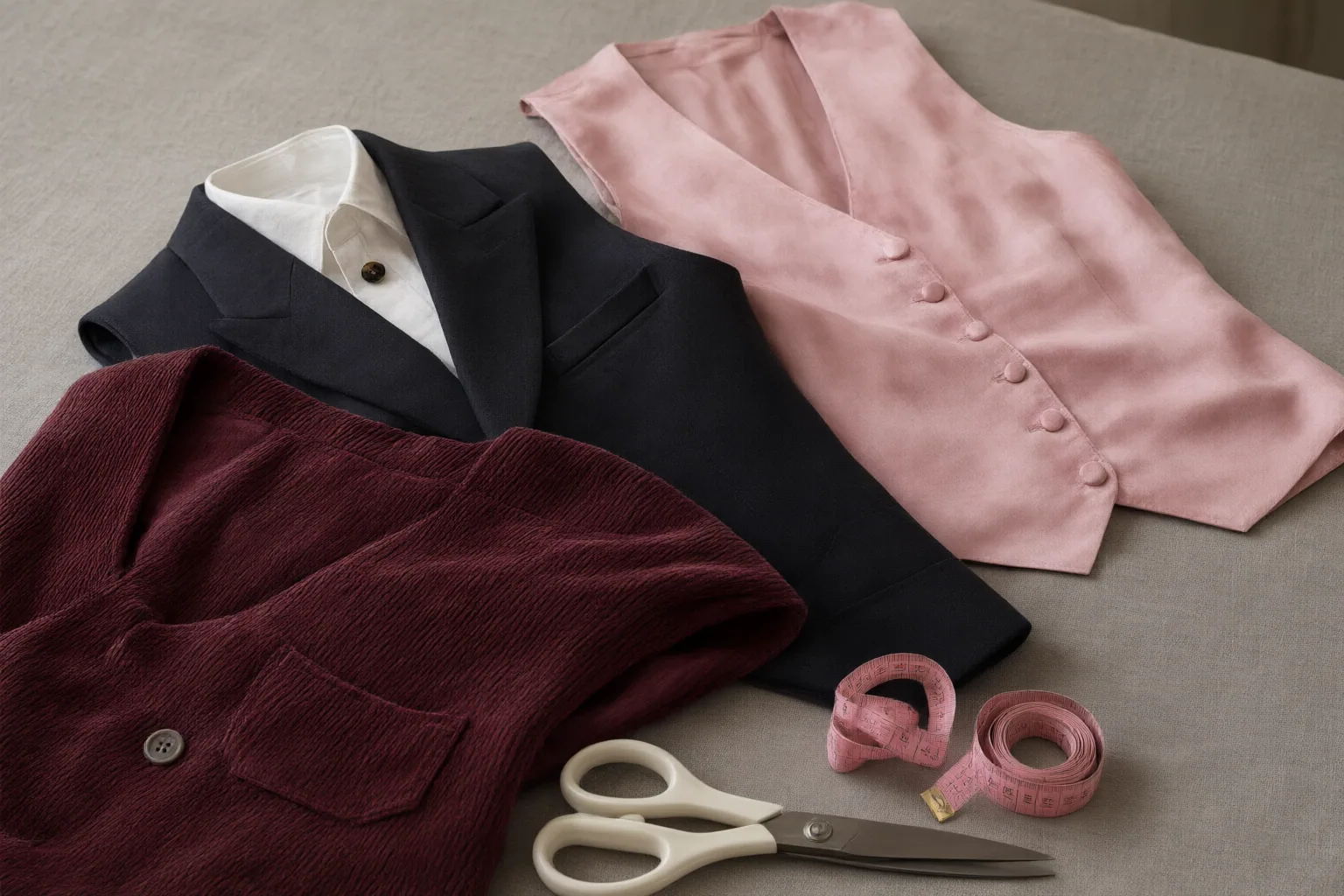
For work, combine a tailored waistcoat with a crisp button-down, fine knit, fitted long-sleeve top, or thin tee. The underlayer should be smooth and relatively lightweight so the waistcoat can sit cleanly around the armholes. Finish the formula with tailored or straight-leg trousers for a professional line.
To prevent the outfit from feeling stiff, adjust color and fabric rather than adding more detail. A neutral or monochrome combination offers a straightforward, cohesive result. You can also separate the waistcoat from matching suit trousers and use an understated base layer. Fabric weight should suit the conditions: linen, cotton, and other lightweight options are associated with warmer weather, while wool, tweed, and heavier textures are positioned for cooler days. Before leaving, check that the layers do not bunch and that the buttons close without strain.
Make It Casual for the Weekend
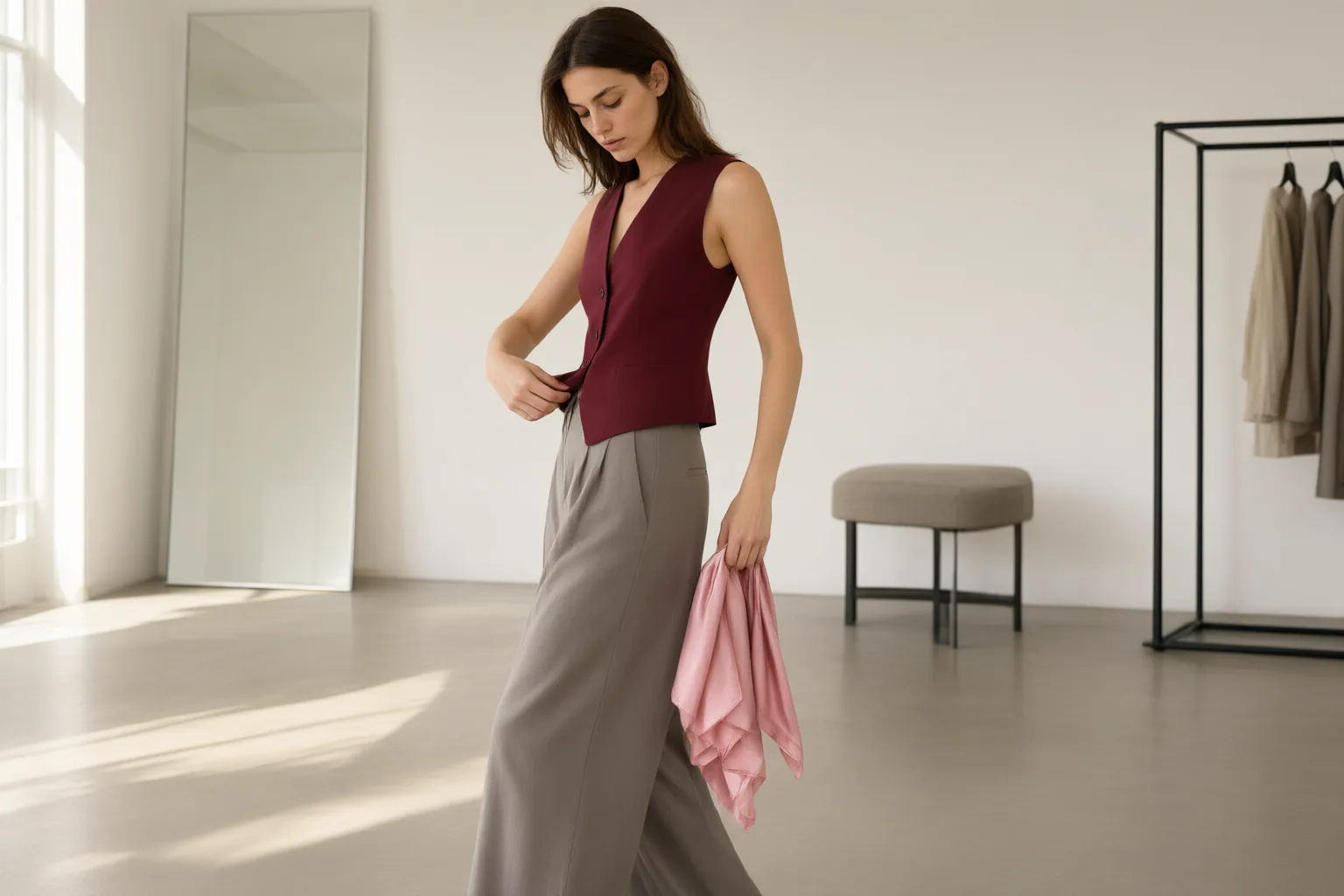
The simplest weekend formula is a waistcoat with straight-leg or relaxed jeans, a plain tee or tank, and informal footwear such as sneakers, flat sandals, or boots. Leaving the waistcoat unbuttoned can reduce its formal character, while relaxed separates create contrast with its tailored origins.
Keep the surrounding pieces visually quiet if the waistcoat has a bright color, pattern, or pronounced texture. Styling sources caution that too many competing colors, patterns, textures, and accessories can make the result feel overworked. Conversely, a neutral waistcoat can support a monochrome outfit or act as a structured layer over basic separates. Proportion still matters: team a short, fitted style with roomier jeans, or balance a longer, looser waistcoat with a more streamlined base. The objective is not to remove all polish, but to make the structure feel compatible with ordinary weekend clothes.
Conclusion
Across all three formulas, the repeatable checks are the same. Choose a waistcoat that neither pulls nor hangs in a boxy way, keep any underlayer thin enough for clean armholes, and balance the garment’s length and shape against the bottoms. Use lightweight fabrics in warmer conditions and heavier, textured options when it is cooler. Neutral combinations are an easy route to cohesion; when the waistcoat is bold, simplify the remaining pieces.
Choose the formula that matches your next occasion—worn alone, layered for work, or relaxed with jeans—then assess its fit, coverage, fabric weight, and proportions before wearing it.
Disclosures and limitations
- This article was prepared with AI assistance using only the editorial and commercial styling sources identified by the supplied source IDs; their guidance is not independent product testing or a universal rule.
- No products, prices, availability, ratings, or affiliate offers were supplied or recommended. Any affiliate links added during publication should be clearly disclosed.
Related reading
Sources
- 30 How to Style Waistcoat Vest Outfits for Modern Layers — Sew Mama Sew
- How to Wear Waistcoats for Men? 18 Outfit Ideas — Outfit Trends | How to Wear and What to Wear Styling Tips
- How to Style a Waistcoat Without Looking Overdone — FASHION TIPS & ADVICE –
- How To Style A Men’s Waistcoat Casually — The Dark Knot
- 23 Ways To Style A Waistcoat To Look Chic Year-Round – Glam — Glam
- 11 Waistcoat Outfits Women Actually Wear — ZAVI
- The Do's and Don'ts of Wearing a Waistcoat with Every Outfit — String & Thread
- 20 Waistcoat Top Outfit Ideas for a Sharp Modern Update — Sew Mama Sew