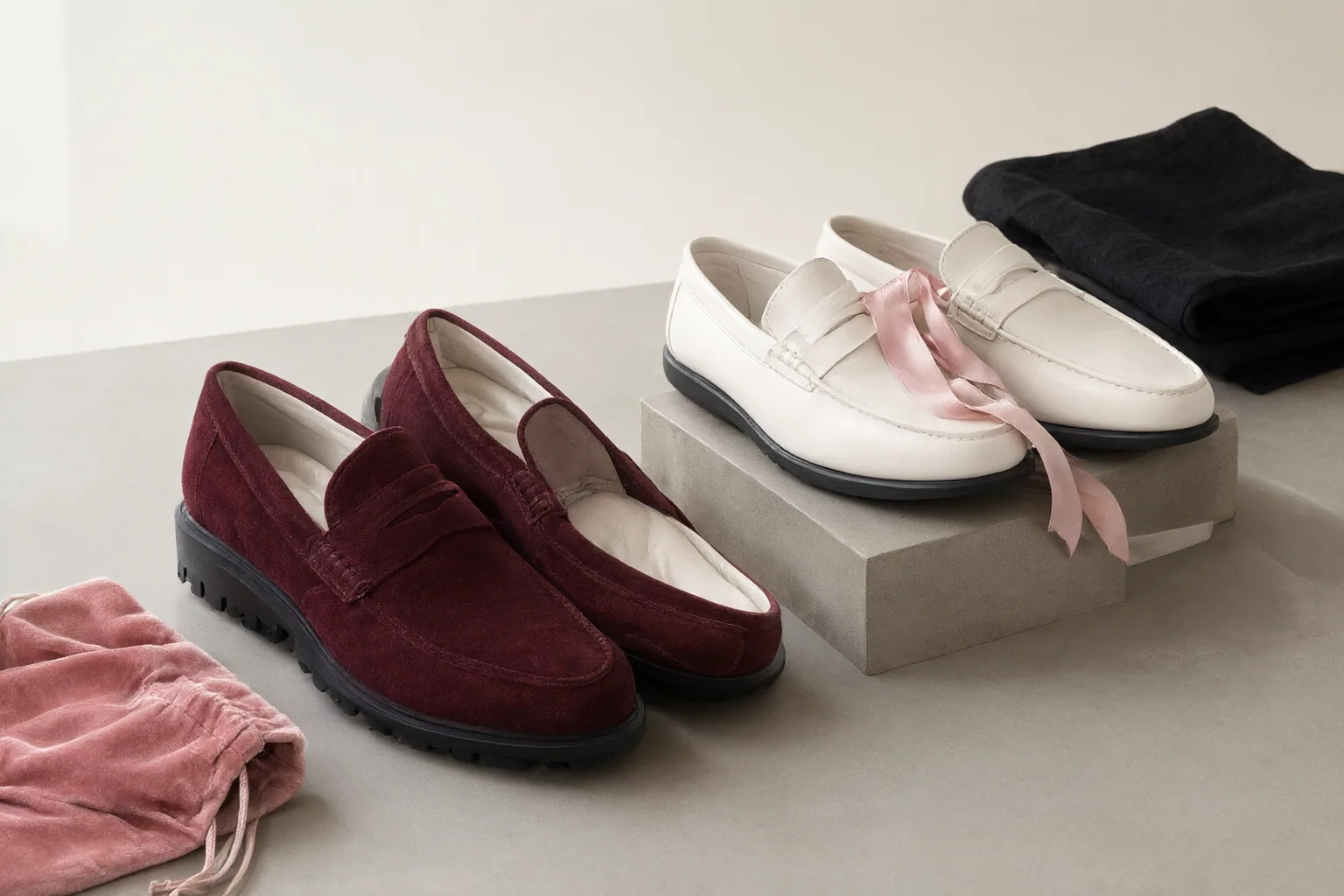
Choose loafers by matching their fit, cushioning, support, flexibility, traction, and materials to your actual commute and workday. Judge office suitability separately: a polished silhouette does not guarantee walking comfort or compliance with every dress code.
Start With Your Commute and Workplace Requirements
Begin with the demands of a typical day. Estimate how much time you spend walking, standing, changing transit, or moving between meetings, then assess comfort features accordingly. A short drive and mostly seated schedule may require less support than a commute involving long sidewalks, train platforms, or extended standing.
Next, consider workplace formality independently. Casual and business-casual loafers may suit some offices but fall short of stricter dress codes. Likewise, a refined-looking pair may still provide inadequate support for sustained walking. The supplied guides present soft casual loafers and loafer-sneaker hybrids as commute-oriented possibilities, but those categories do not establish comfort for every wearer. Your foot shape, route, and daily workload remain decisive.
Check Fit, Cushioning, Flexibility, and Weight
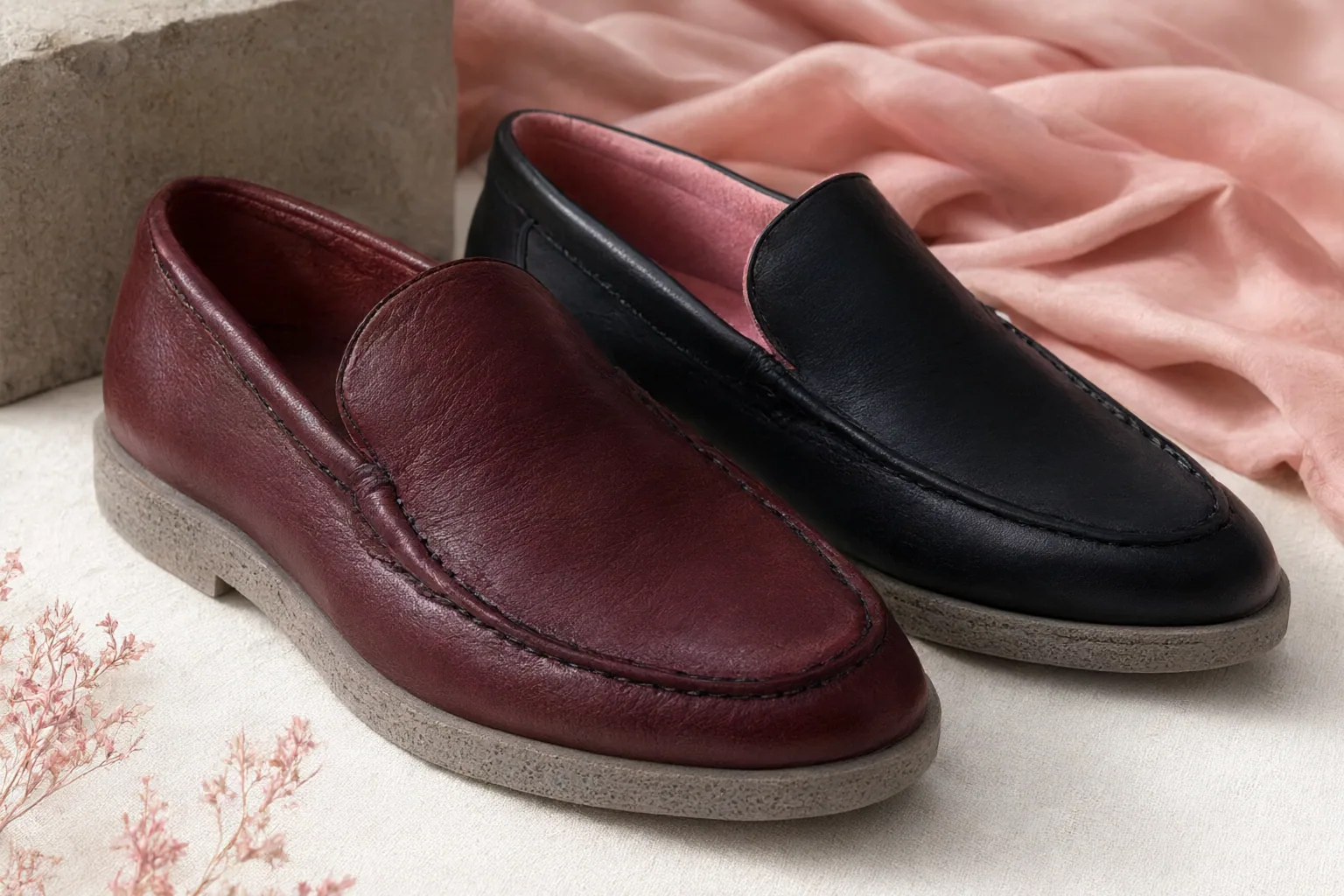
Use a practical fit check rather than choosing primarily by trend or appearance. Your toes should not feel compressed, and the upper should not create obvious pressure across the foot. Check whether the heel rubs or moves excessively while walking. Because some loafers run narrow, shoppers with wider feet should look for width options and compare their measurements with the brand’s sizing information.
Evaluate the structure as well as the size. The supplied guides recommend checking for interior cushioning, suitable arch support, a flexible sole, a soft upper, and manageable overall weight. Flex the shoe gently at the forefoot and walk on a clean indoor surface when store or return rules permit. Stiff uppers, rigid soles, excess weight, toe pressure, or heel rubbing may make a long day harder and can increase reliance on a break-in period. No single feature guarantees comfort, so consider how the elements work together for your foot shape.
Match Materials and Outsoles to Daily Conditions
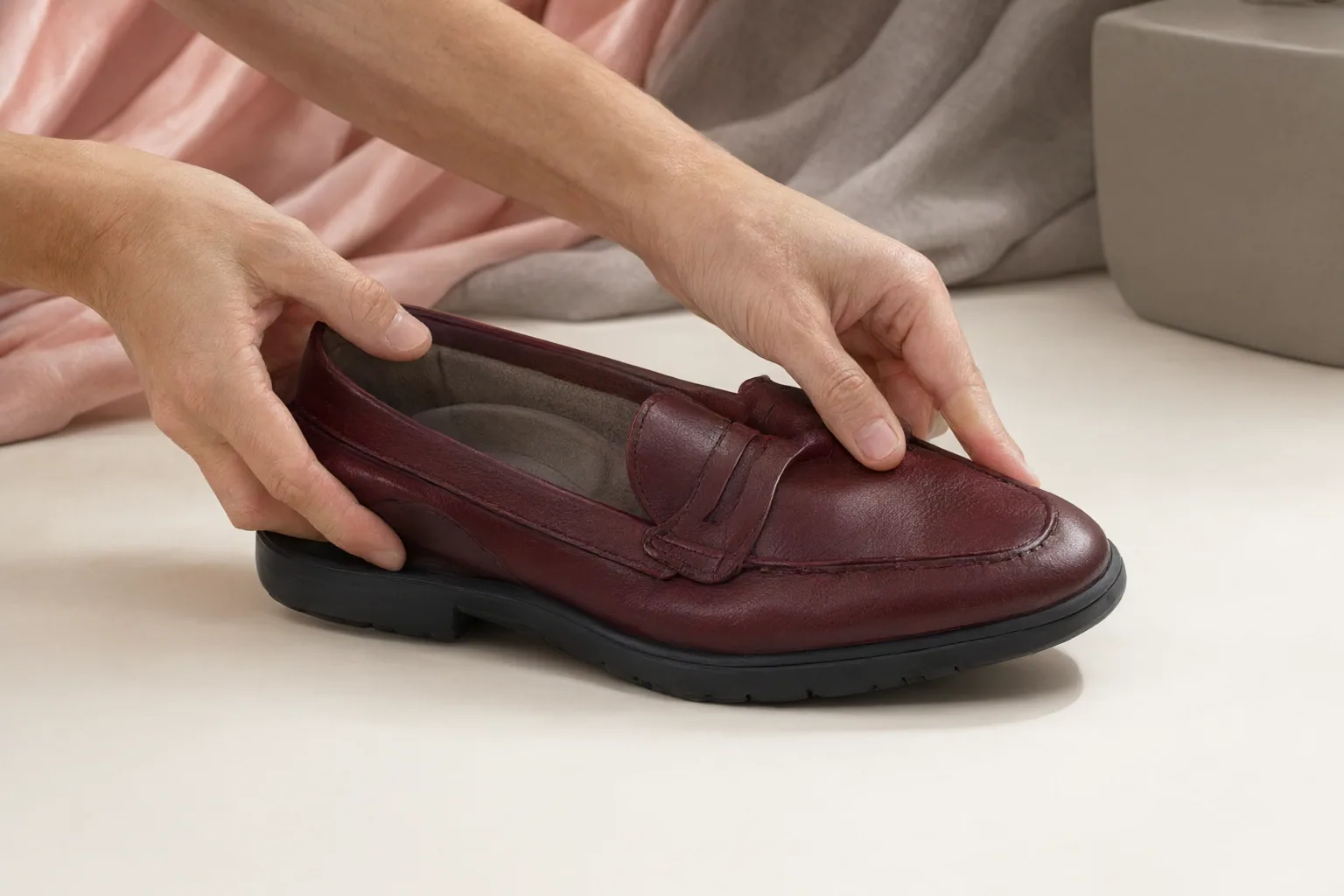
Choose the upper and outsole for the conditions you regularly encounter. Soft leather, suede, and moccasin-style construction are described in the sources as common approaches for casual commute loafers. Breathable uppers may help during warmer trips, while unlined or highly breathable designs can provide less warmth in cold weather. Some faux materials may also be less breathable than leather.
Inspect the outsole rather than assuming every loafer is ready for wet sidewalks or polished floors. Look at its material, tread pattern, flexibility, and contact area. Loafer-sneaker hybrids pair a loafer-style upper with a cushioned, grippy sneaker-style sole, but their appearance may not satisfy a formal workplace. Treat descriptions of grip, support, and durability as guide or listing claims—not independently verified results—and compare them with your route and dress code.
Conclusion
Before buying, confirm that the loafer fits your workplace’s level of formality and your commute’s walking or standing demands. Check toe pressure, heel movement, width, upper softness, cushioning, arch support, sole flexibility, weight, and outsole tread. Consider whether the materials provide an appropriate balance of breathability and warmth for the season.
For an online purchase, review the size guide, available widths, care requirements, and return policy. Comfort varies by foot shape and use, so avoid treating the loafer silhouette—or any isolated feature—as proof of all-day performance. Use this checklist to compare your shortlisted pairs against your real commute and workday, then confirm sizing and return terms before ordering.
Disclosures and limitations
- This article was prepared with AI assistance using the supplied editorial and commerce-oriented source material; no products were independently tested, and individual fit and comfort vary.
- Some underlying guides may contain affiliate links or product-listing details. No specific products, prices, ratings, availability claims, or affiliate recommendations are included here.
Related reading
Sources
- 4 Best Driving Loafers for Long Commutes in 2026 – shoestoryteller.com — Shoe Storyteller
- The Best Loafers for Women Who Work in 2026 (And How to Style Them) — BusinessWomen
- Best Everyday Loafers for Women in 2026 (Comfort & Style) — Stepique
- Best Women’s Loafers for Work: Comfortable, Lightweight Options for Your Office – The Dapper Millennial — dappermillennial.com
- 7 Best Loafers for Comfortable Business Casual – Stylishly — stylishly.blog