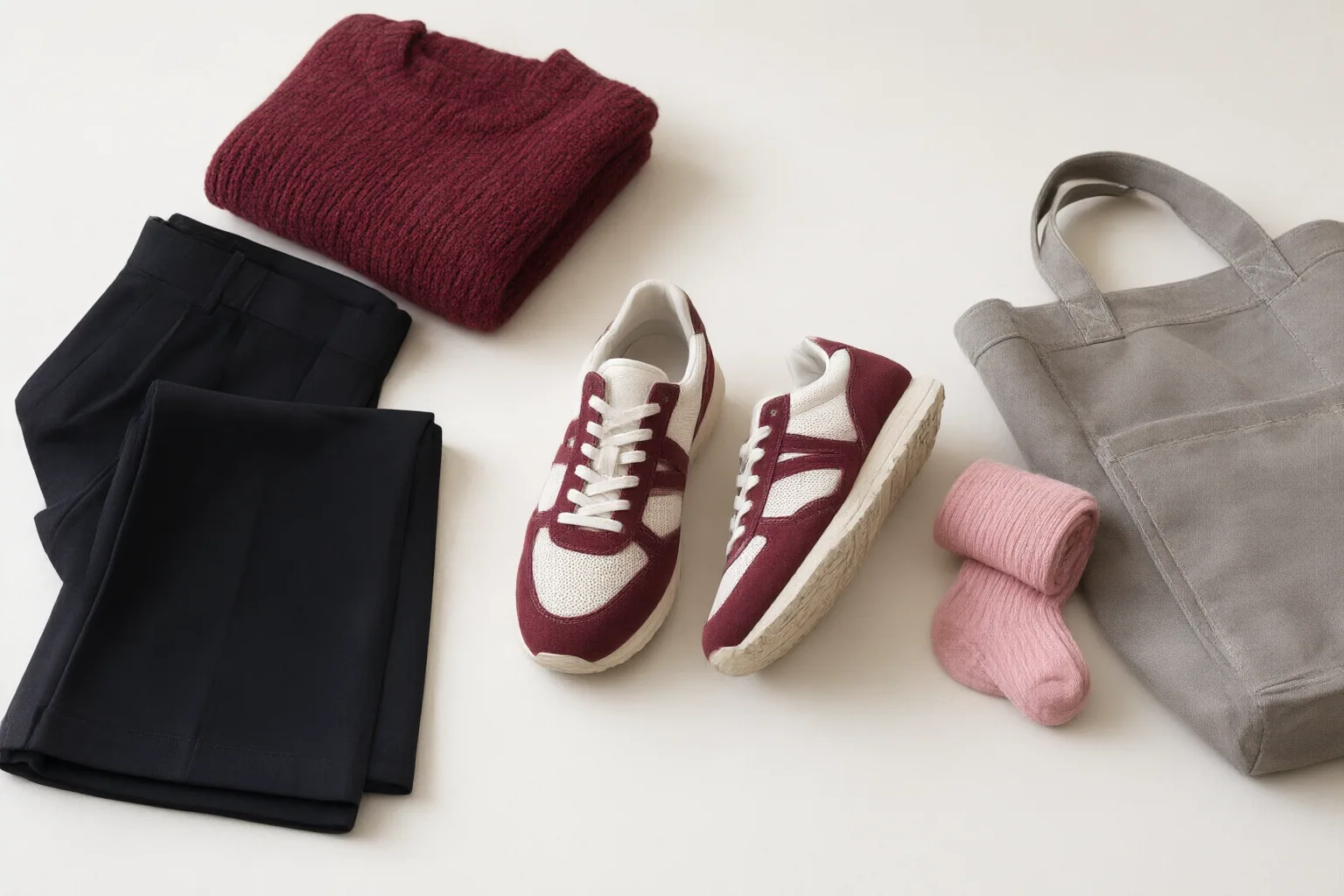
Build the outfit in three passes: decide whether the sneakers should stand out, balance their visual weight against the clothes, and check whether the complete look suits the day’s activities and dress expectations.
Start With Color and Occasion
Begin by choosing the sneakers’ role: focal point or quiet foundation. Foot Locker’s observed homepage frames sneaker selections around moods such as standing out or keeping a look low-key and presents footwear for multiple occasions. Use that framing as styling context, not proof that any look is trending.
For a restrained outfit, connect one sneaker color to a nearby element such as trousers, socks, or an outer layer, while keeping the remaining pieces neutral. To emphasize the shoes, place their strongest color against a simpler outfit instead. Repeating every color can feel overly coordinated, so select one visual connection. Before finalizing the combination, ask whether its contrast and formality make sense for the commute, workplace, errand, or weekend plan.
Balance the Outfit’s Proportions
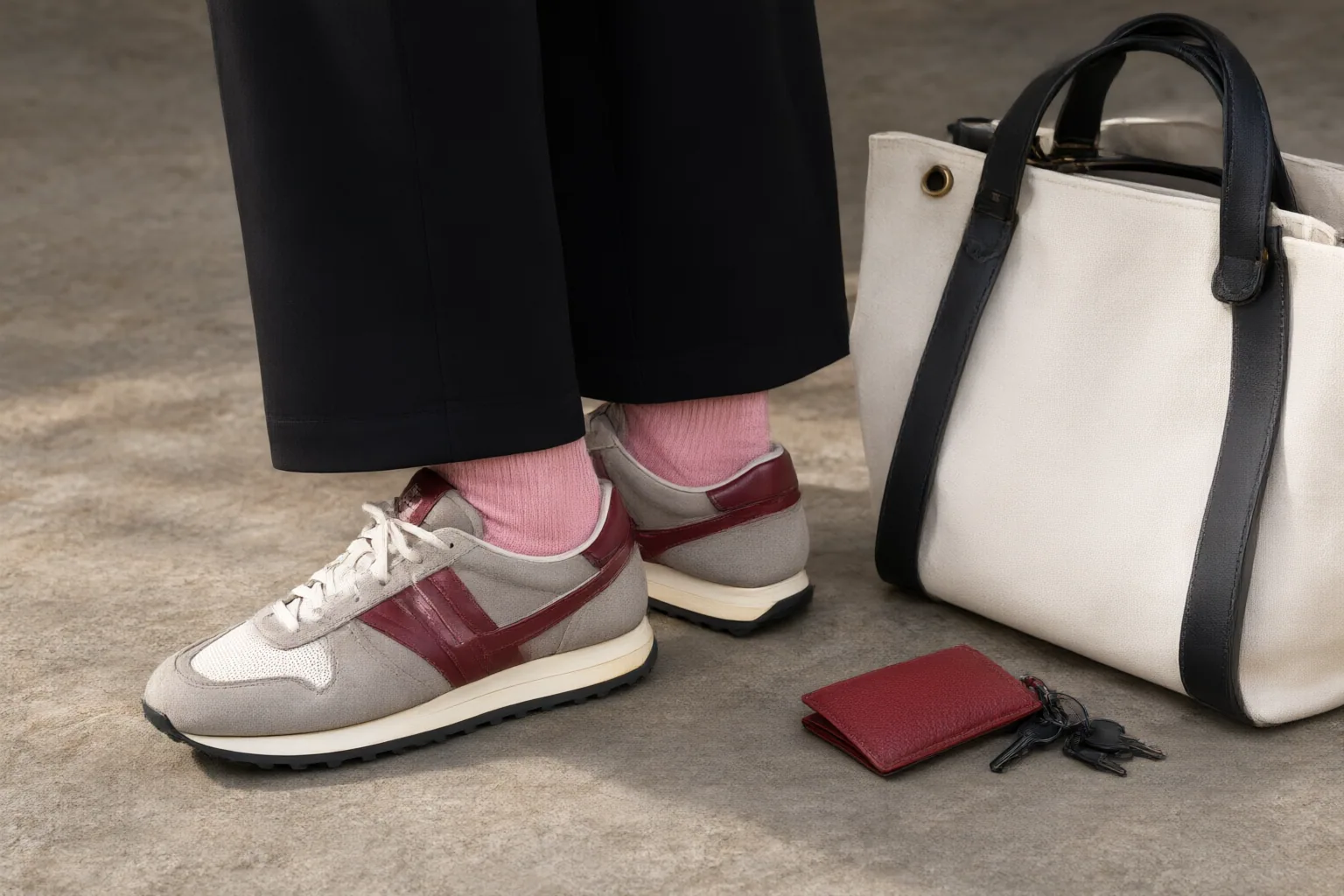
Evaluate the sneakers and clothing as a single silhouette. Check whether the trouser hem sits cleanly above the shoe, falls over it, or creates excess fabric around the ankle. Then consider hem width and sock visibility: either can change how substantial the footwear appears. If the lower half feels visually heavy, simplify the upper layers or use a cleaner trouser line. If the shoes appear disconnected, a visible sock or repeated color can create continuity.
Do not assume every retro-labeled shoe has the same shape or purpose. Nike’s observed listing places retro-labeled Air Jordan 1 and Air Jordan 4 models alongside lifestyle, running, and training footwear. Treat “retro” as a label requiring further inspection, not as a uniform category. Judge the proportions using the actual pair and outfit rather than relying on the model family’s reputation or name.
Run the Commute and Weekend Comfort Checklist
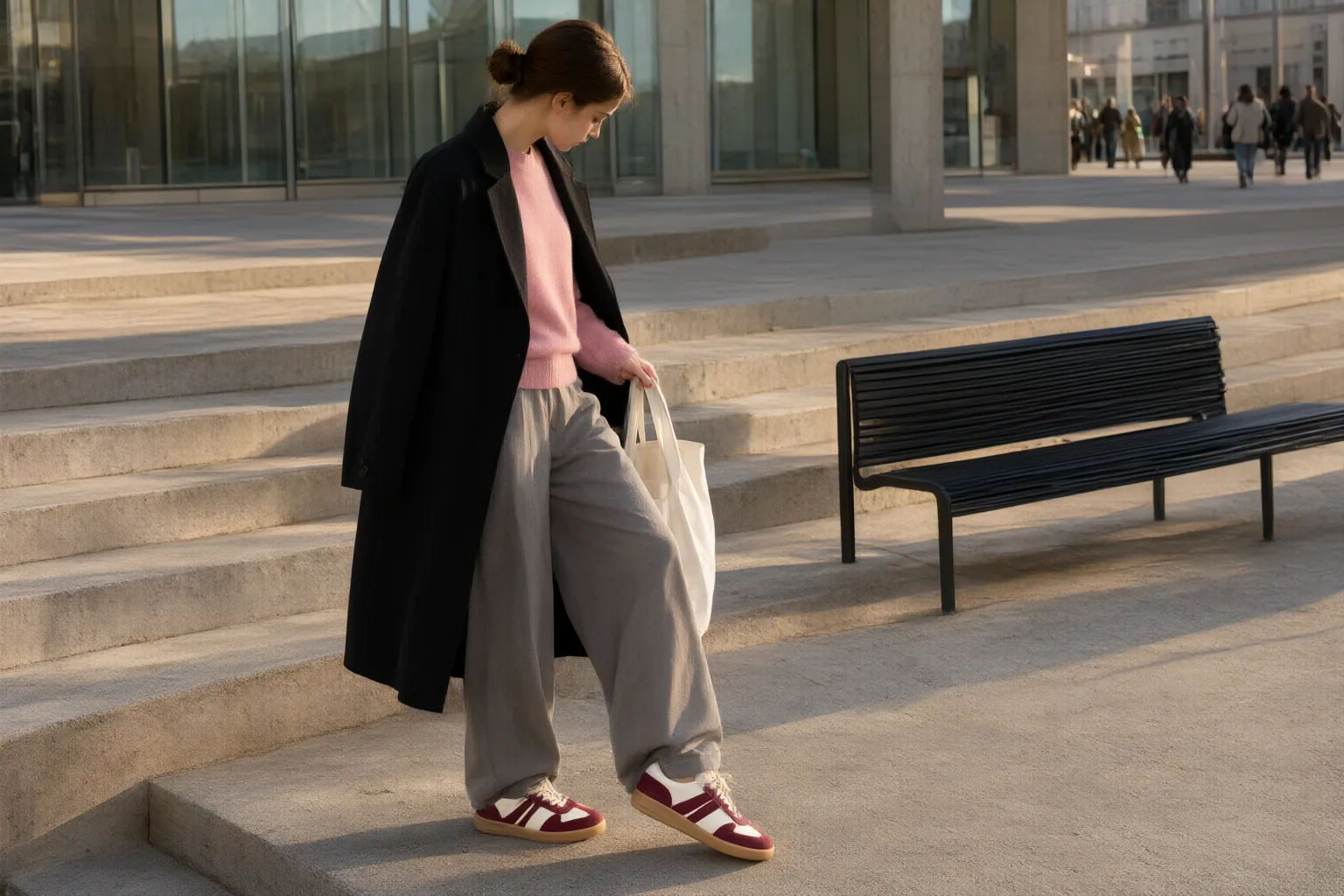
For a commute, list the expected time on foot, transport changes, weather exposure, indoor dress expectations, and any need for an extra layer. Check that the socks work with the shoe opening and trouser length. If the day involves extended walking, do not infer suitability from appearance or a retro label; the supplied retailer pages do not establish all-day comfort, commuting performance, or sizing consistency.
For a weekend outfit, start with the planned activity rather than assuming the dress code is casual. Consider walking time, surfaces, weather, and whether the outfit must transition between settings. Make sure layers can be added or removed without upsetting the color balance or proportions.
Finally, verify the exact footwear category and intended wearer. Nike’s listing shows separate men’s, women’s, and children’s versions for some shoe families, so a shared model name does not settle either point. Confirm fit and relevant return terms directly with the retailer before purchase, especially when planning extended wear.
Conclusion
A practical retro-sneaker outfit does not require a complicated formula. First decide whether the shoes should lead the color story or stay understated. Next, examine trouser length, hem width, socks, and the visual weight of the upper layers. Then match the complete look to the occasion and planned activity without treating a retailer category as evidence of comfort or performance.
Apply this checklist to one commute outfit and one weekend outfit. Compare the two looks, adjust one variable at a time, and then confirm the shoe’s category, intended wearer, fit, and return terms with the retailer before buying or wearing it for an extended period.
Disclosures and limitations
- This article was prepared with AI assistance from retailer-page research observed on September 2, 2026. Those sources are not independent fit or comfort evaluations, and no specific products, prices, availability claims, or affiliate recommendations are included.
Related reading
Sources
- Sneakers, Apparel & More | Foot Locker — footlocker.com
- Nike Shoes & Sneakers. Nike.com — Nike.com