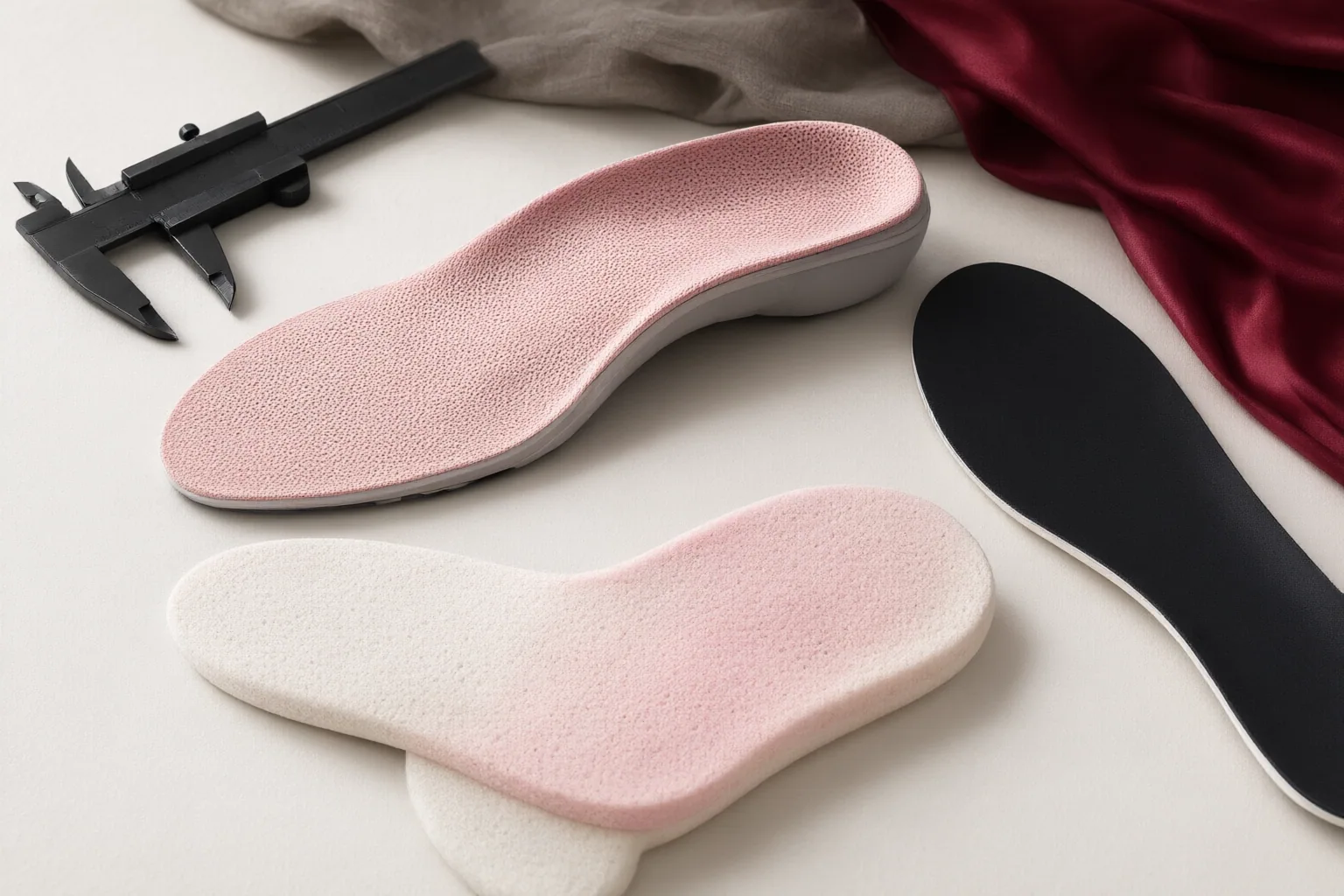
Choose shoe insoles by matching their arch profile, structure, length, and thickness to both your support needs and the space inside the shoes where you will wear them.
Start With Your Arch and Support Needs
Begin by identifying whether your arch profile is low, medium, or high, then consider where discomfort occurs and how much interior volume the shoe offers. Commercial fitting guides distinguish soft cushioning from semi-rigid support: cushioning emphasizes comfort and impact absorption but provides less arch control, while semi-rigid designs offer more motion control. Neither option is universally better. The useful choice depends on the type of support sought and whether the shape feels supportive rather than hard or intrusive. Treat these descriptions as shopping guidance, not medical conclusions.
Protect Heel Stability and Toe Room
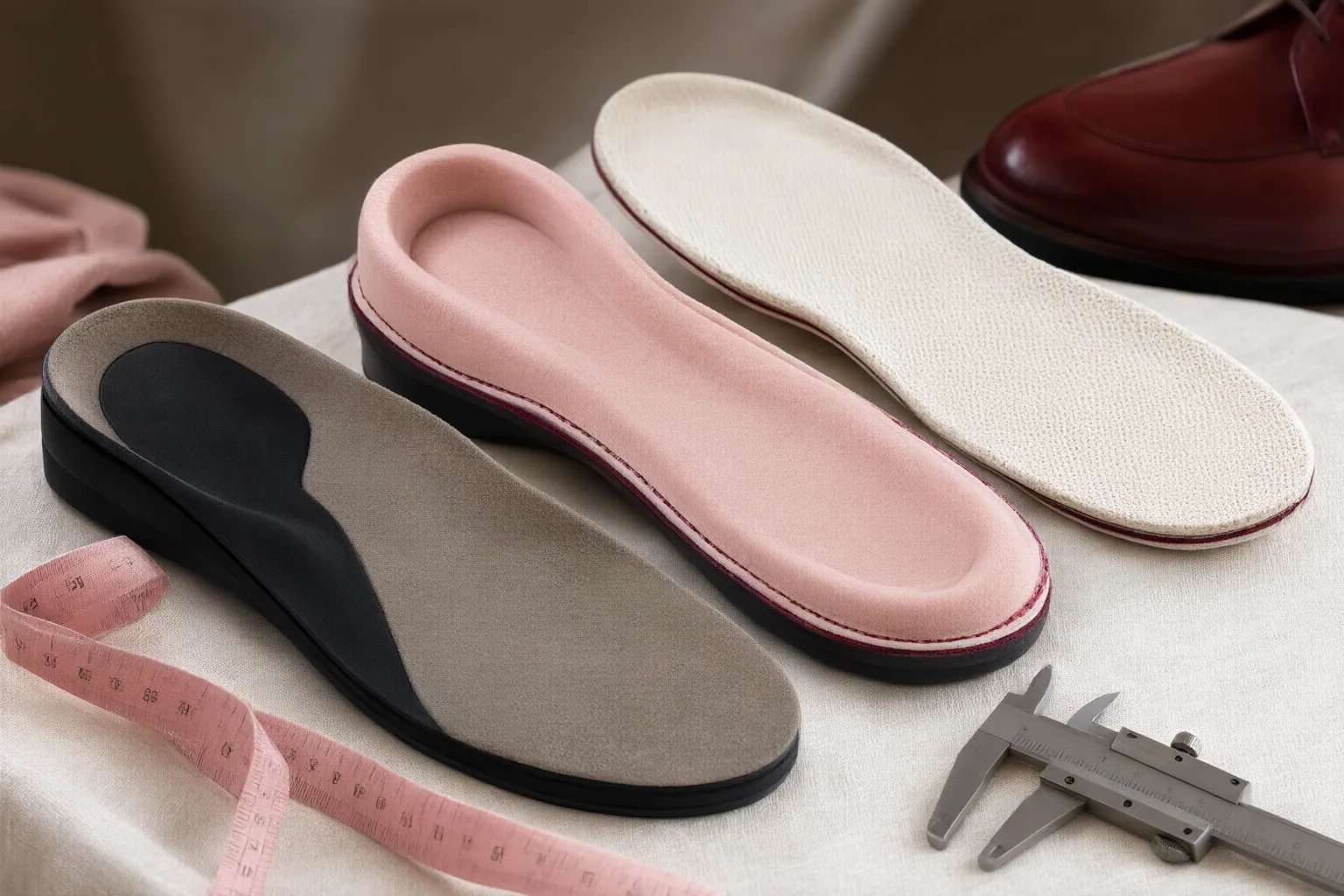
Insole length and thickness can change the fit of an otherwise suitable shoe. A full-length design generally replaces a removable factory liner; stacking it on top may make the shoe too tight. A three-quarter-length insole can preserve more space around the toes in a lower-volume shoe.
After insertion, confirm that the insole lies flat and that its heel cup is centered beneath your heel. Warning signs of a mismatch include a raised or unstable heel, material folding around the arch or toe box, crowded toes, or an arch that feels hard instead of supportive. These problems may indicate unsuitable thickness, length, rigidity, or arch height. An insole also cannot correct a shoe that is already too short or narrow.
Match the Insole to the Shoe
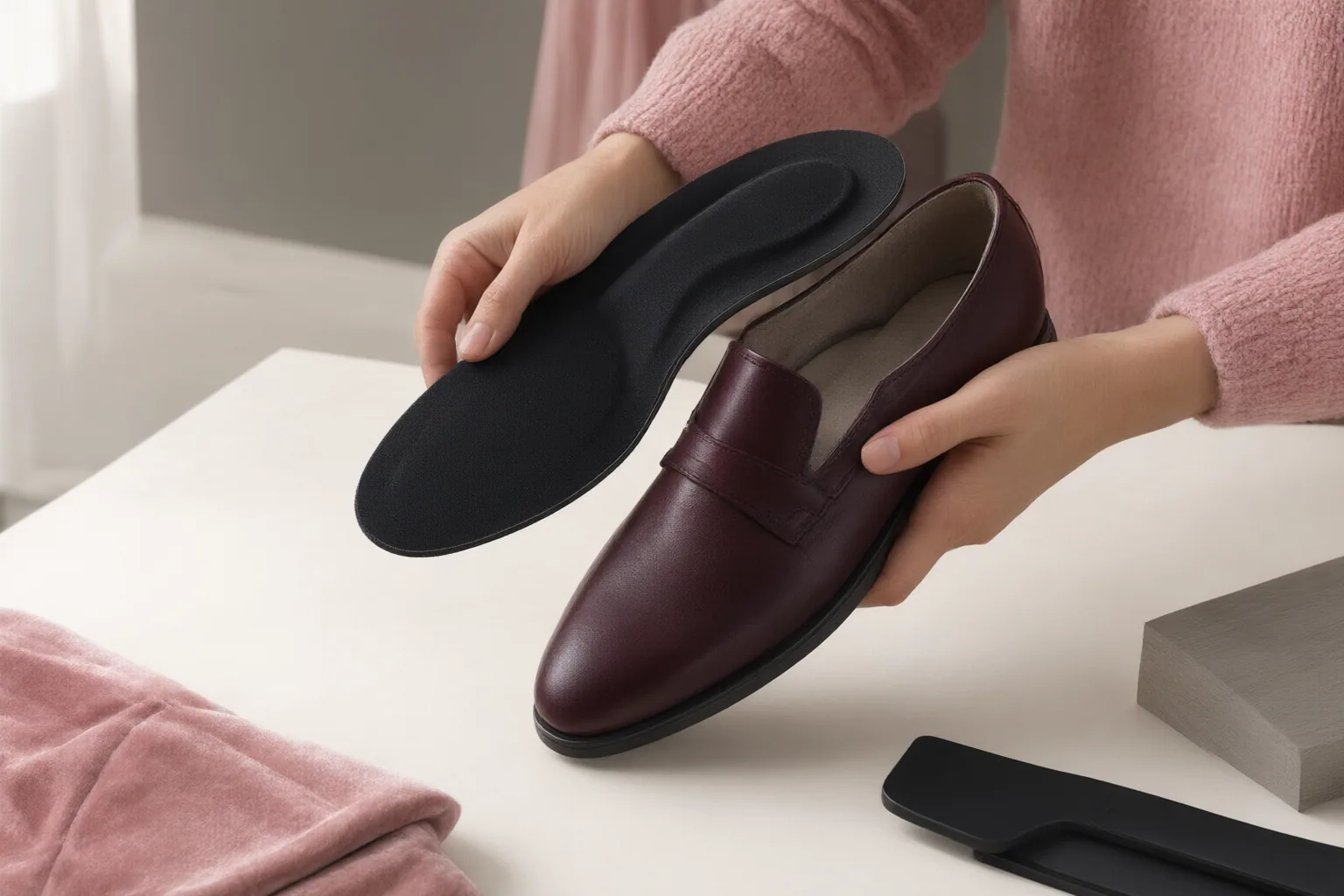
Evaluate an insole inside the footwear where it will actually be used. A design that suits a roomy boot or casual shoe may crowd a narrow dress shoe, while an insole intended for a running shoe may conflict with that shoe’s existing cushioning and geometry.
Use this compatibility checklist:
- Check whether the factory liner is removable before choosing a full-length replacement.
- For running shoes, consider the cited guidance favoring lower-profile designs.
- For narrow, low-volume dress shoes, consider a half-length design with a slim heel cup and thin forefoot.
- Compare the manufacturer’s size chart and account for the shoe’s available volume.
- Recheck heel position and toe space after insertion.
Retail categories also span boots, sneakers, cleats, and sandals, but category labels alone do not establish that one insole will fit every footwear type.
Conclusion
A suitable insole should lie flat, sit centrally beneath the heel, and leave adequate toe room without lifting the heel or folding inside the shoe. Introduce a new insole gradually, since the cited guides recommend adjustment periods but do not agree on one universal schedule. Stop relying on self-selection and seek professional evaluation if pain persists. Before committing, inspect the removable liner and available space in your intended shoes, then compare the candidate insole’s arch profile, length, thickness, and heel placement.
Disclosures and limitations
- This article was prepared with AI assistance from the supplied research package. Its fitting guidance comes primarily from commercial publications and should not be treated as independent clinical advice.
- No specific products, prices, ratings, personal tests, or affiliate offers are presented in this guide.
Related reading
Sources
- How to Choose Arch and Heel Support Insoles | Fit, Pain, and Foot Type — Well Whisk
- Amazon.com : Shoe Insoles — amazon.com
- Insoles for Every Shoe: How to Match Support to Footwear Type — CURATED SENSE
- Insoles With Arch Support: Match the Design to Your Foot — Footlogics USA
- How To Choose Correct Insoles: A Comprehensive Guide — Myshoesreview.com
- Shoe Insoles: The Ultimate Buying Guide — Orthofeet®
- Amazon.com : Shoe Inserts & Insoles — amazon.com