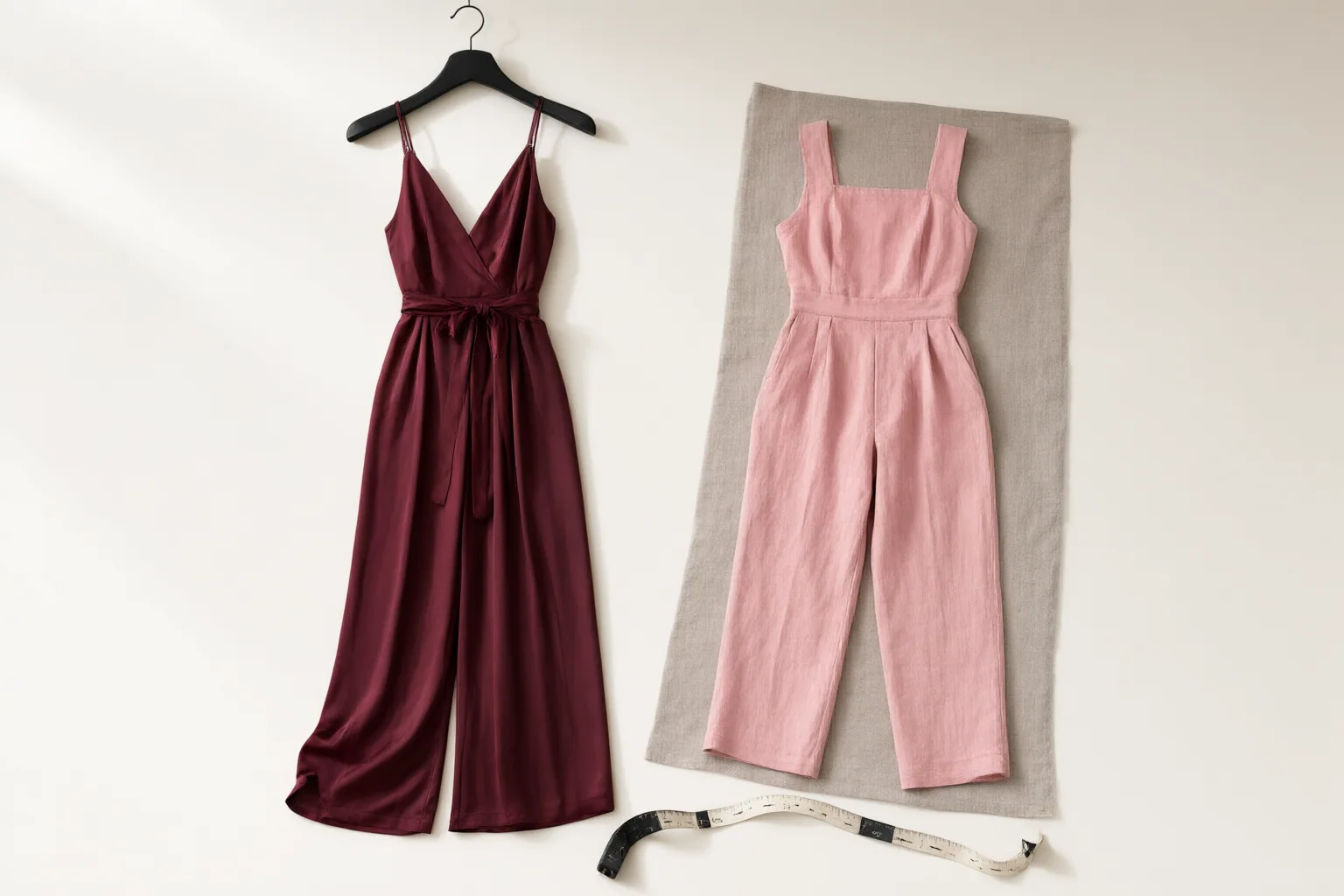
A jumpsuit fits when the rise matches your torso length, the waist sits at your natural waistline, the leg cut balances your hips and inseam, and the fabric drapes without pulling. Adjustable straps, elastic or smocked waists, and a measurement-based size chart do most of the work.
Why Jumpsuit Fit Starts with the Rise and Torso
A jumpsuit is a single garment combining a top and trousers, marketed for one-and-done dressing across casual, work, travel, and formal occasions. A romper has short bottoms, while jumpsuit legs run full-length, cropped, or flared — worth checking because some catalogs use the two terms interchangeably.
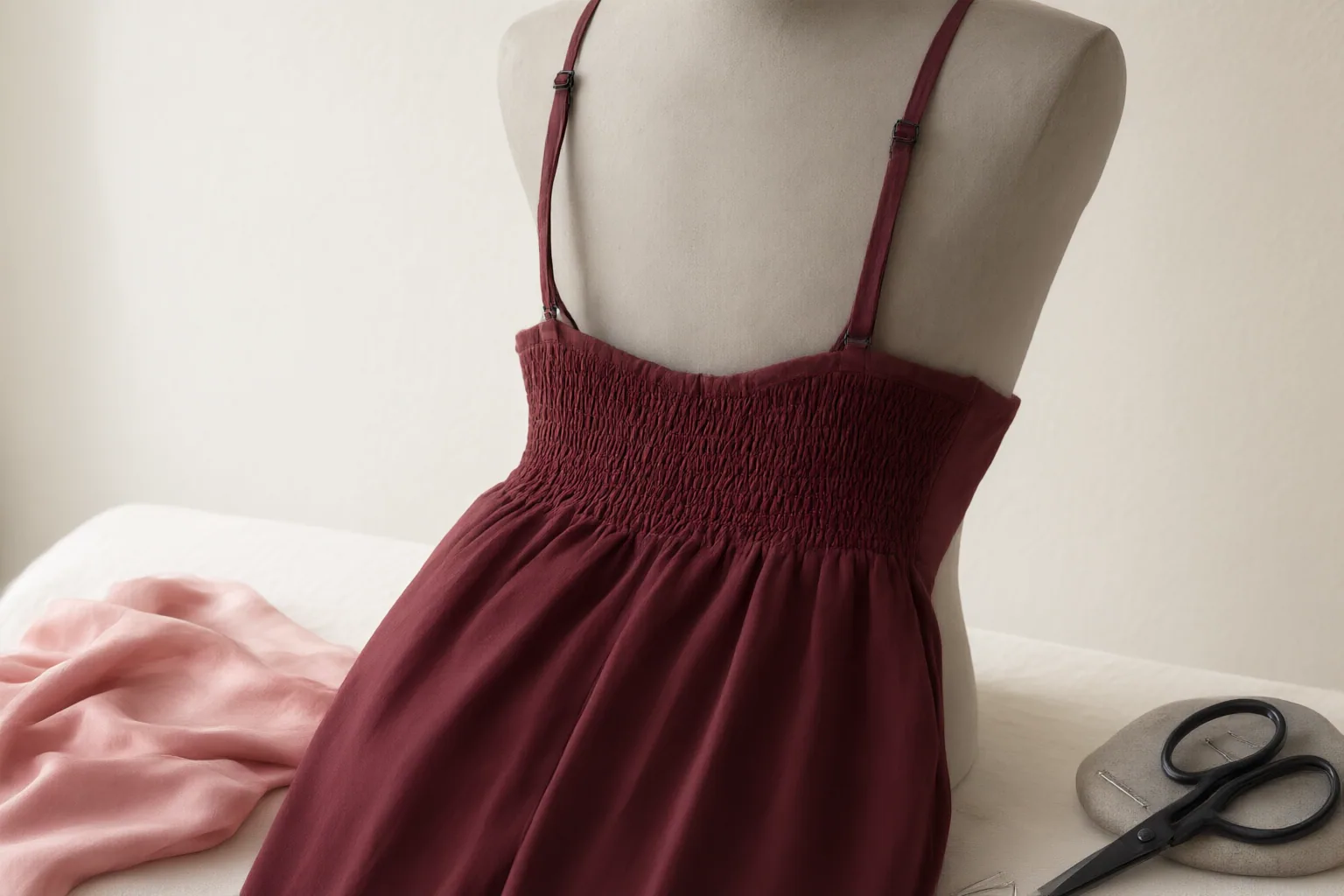
Because top and bottom are connected, fit hinges on torso length, waist placement, and leg silhouette, and a one-size-fits-all approach rarely works. The rise is the most common pitfall for long or short torsos: when it is off, the waist lands away from your natural waistline. Fit guidance recommends smocked or elasticated waists and adjustable straps precisely because they let the garment sit at the natural waist and keep the neckline where intended, avoiding the sagging effect of fixed-length straps.
Matching Silhouette to Waist, Hips, and Leg Shape
Silhouette balances the waist, hips, and inseam. Wide-leg jumpsuits are described as flattering across body types, including pear and hourglass shapes: hem volume balances the hips, while a waist defined by a belt or internal elastic creates an elongated line. Necklines matter too — V-necks are described as elongating the upper body and halters highlight the shoulders — and retailers offer varied sleeve lengths and leg cuts, including cropped and flared, so you can match leg length to your inseam.

Fabric, Features, and Sizing for Everyday Wearability
Fit guidance says a jumpsuit should drape from shoulder to ankle without pulling or bunching, so fabric drives everyday wearability. Cotton suits casual looks, while silk or satin reads dressier. Stretch jersey is named for travel and casual wear, double-layered modal is cited for smoothing while staying breathable, and fluid crepe or satin is recommended for formal movement; some travel lines are also marketed as wrinkle-resistant.
Then check the features: pockets appear across recommended styles, belts or internal elastic add waist definition, and adjustable straps matter most because they absorb torso differences the size chart cannot. For sizing, use a measurement-based size chart rather than assuming one size fits all — one retailer example spans 00/XS to 4/XXL, so confirm the range before ordering.
Conclusion
Before buying, run the fit checklist:
- Rise matches your torso length and the waist sits at your natural waistline
- Silhouette balances your hips, defined by a belt or internal elastic
- Leg cut — full-length, cropped, or flared — works with your inseam
- Fabric drapes from shoulder to ankle without pulling or bunching
- Adjustable straps, pockets, or a smocked waist add flexibility
One cited styling approach swaps flats and a blazer for pumps and jewelry, moving a single jumpsuit from professional to dressier settings.
Next step: measure your torso length, natural waist, hips, and inseam, then use the retailer's size chart and this checklist to shortlist two or three jumpsuits with adjustable straps or an elastic waist.
Disclosures and limitations
- AI-assisted disclosure: this guide was drafted with AI assistance using only the three cited retail and editorial sources (observed 2026-09-19; two lack publication dates, so their recency cannot be verified). No jumpsuits were purchased, tested, or worn, and no prices, stock, ratings, or review data existed in the sources or were invented.
- No affiliate links or product endorsements appear in this guide; retailer examples (such as a size range) are attributed claims from the sources, not recommendations, and any first-person praise in a source reflects that publisher's view rather than verified testing.
Related reading
Sources
- 10 Best Jumpsuits For Women – 2026 – The Good Mother Project — The Good Mother Project
- Top Jumpsuits for Every Body and Style — news.terabox.com
- Shop Women's Jumpsuits & Rompers | Chico's — chicos.com