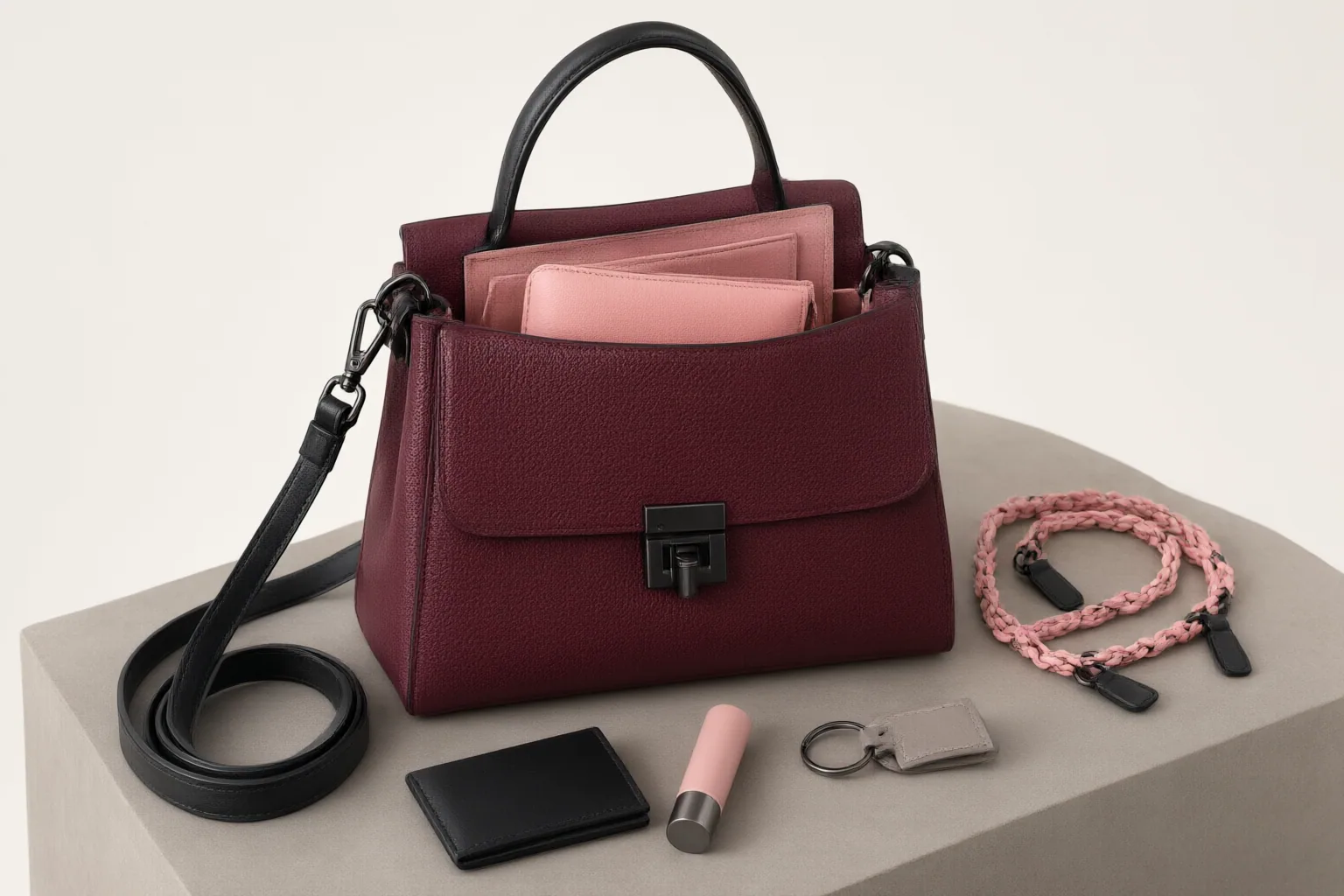
A versatile handbag should match the ways you carry it, hold your actual essentials, and provide clearly documented materials, closure, pockets, straps, and removable components. Check those listing details rather than relying on a broad style or size label.
Start With the Carrying Styles You Will Actually Use
Begin by identifying the carrying modes that fit your routine. Retail and marketplace categories include crossbody, shoulder, hand or forearm, top-handle, clutch, tote, hobo, and backpack formats. These labels help narrow the field, but they do not establish that one bag can perform several roles.
For a convertible design, check exactly what the listing includes and which configurations it explicitly supports. The kate spade new york Duo listing, for example, describes crossbody, shoulder-bag, belt-bag, and clutch configurations. It also identifies an adjustable detachable strap and a removable pouch. Those concrete components provide better evidence of convertibility than a generic description such as “versatile.”
Choose based on modes you expect to use rather than the largest number of possible configurations. Confirm whether every strap or pouch needed for those modes is included before buying.
Match Size and Capacity to Your Everyday Essentials
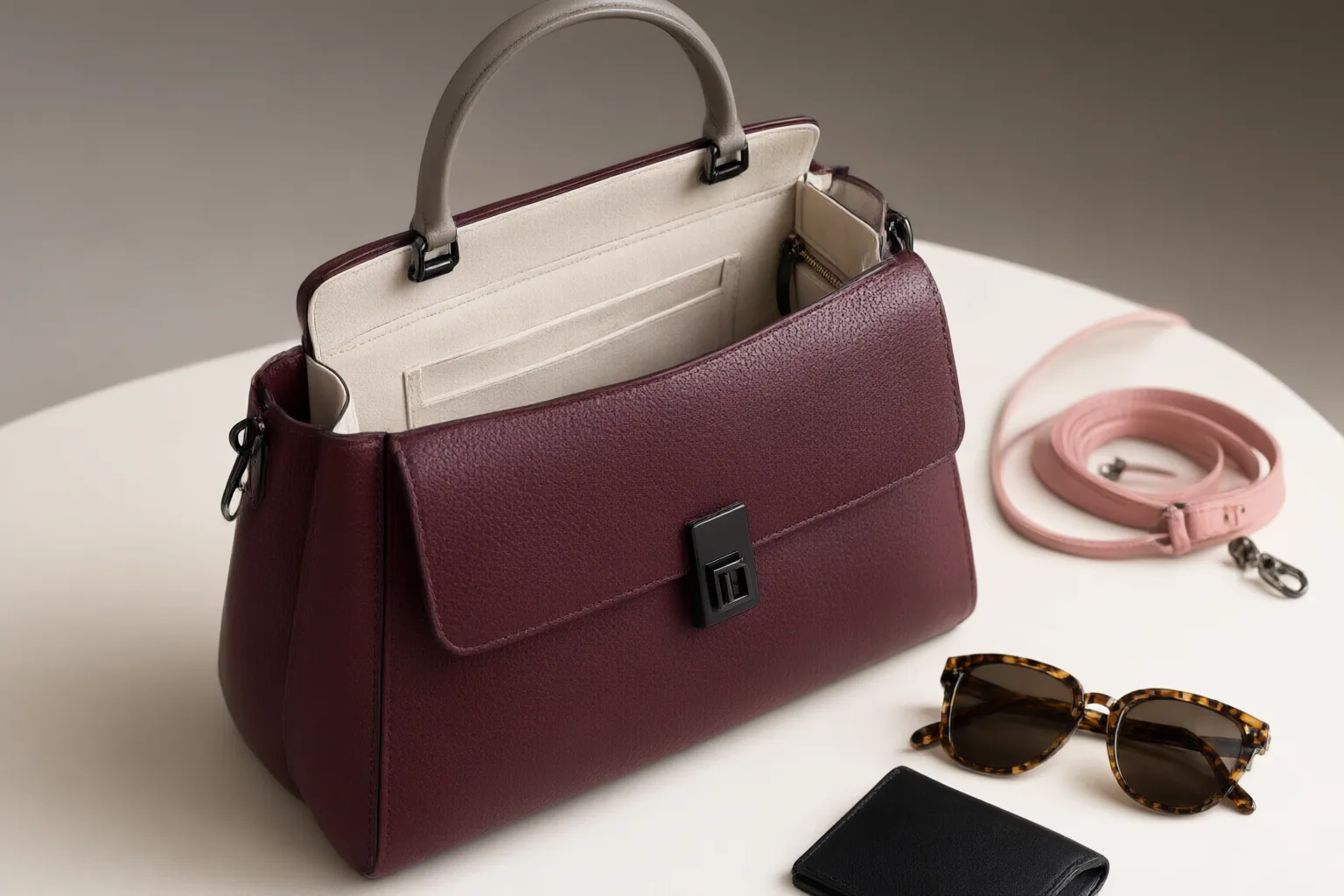
Marketplaces may divide handbags into broad size groups, but an exterior measurement and a stated fit example are more useful for comparison. First, list the items you expect to carry. Then compare that list with the dimensions and capacity language supplied by the seller, without assuming space for anything the listing does not mention.
The Duo listing provides a practical reading example: its dimensions are 8.5 by 10.4 by 2.8 inches, and it states that the bag fits an iPhone Max, credit cards, and an AirPod case. Those details establish the documented size and stated fit, but they do not confirm capacity for a tablet, bottle, notebook, or other unlisted item.
Use measurements to compare candidates consistently, and treat concrete fit examples as limited evidence rather than a promise that all similarly sized belongings will fit together.
Compare Material, Closure, and Organization
Material is a useful comparison category, not a shortcut to an unsupported conclusion about performance. Marketplace filters include leather, canvas, nylon, faux leather, and cotton, while other retailers also organize handbags by material. Record the listed material for each candidate, but do not infer durability, weight, weather resistance, or care requirements when the product information does not state them.
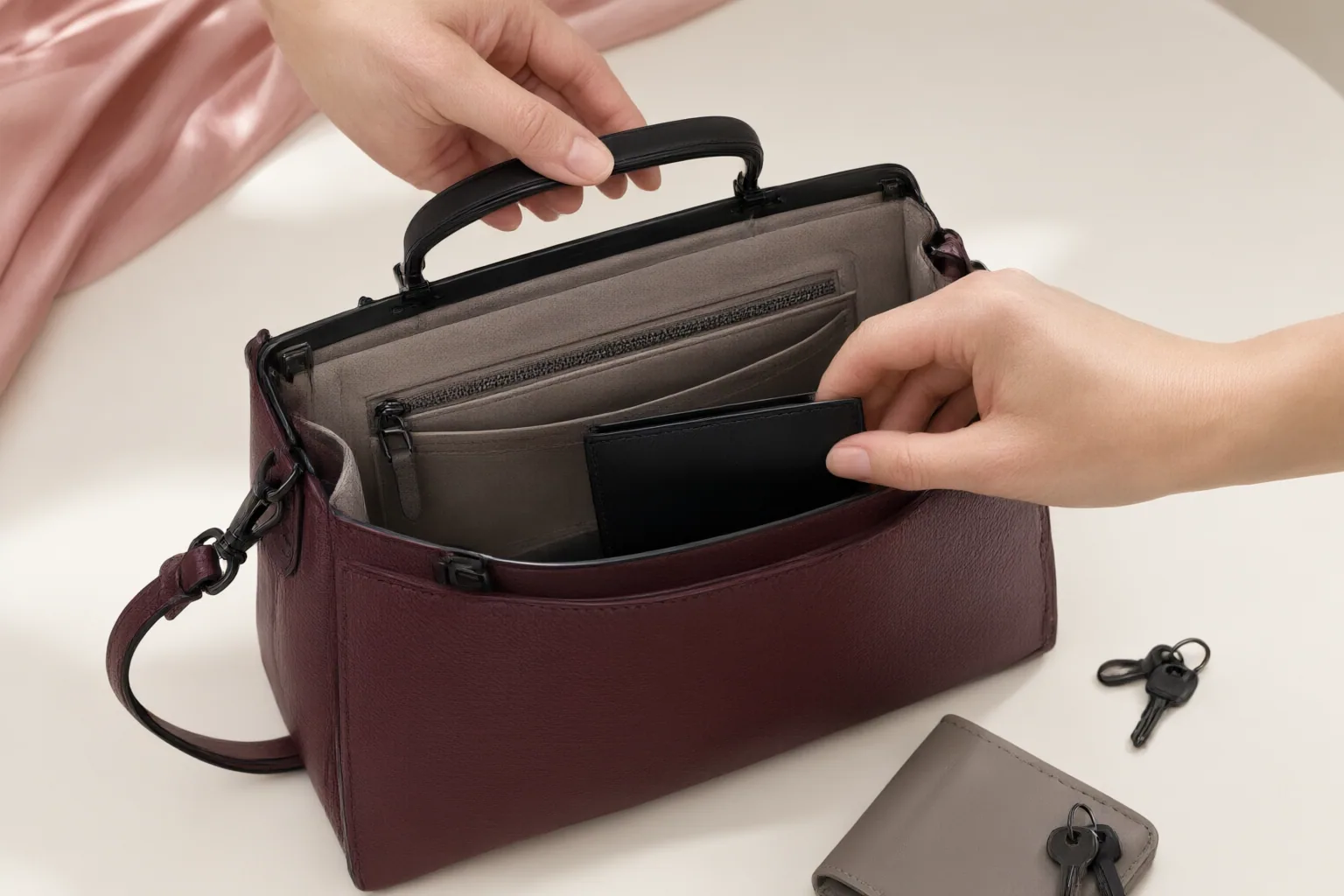
Next, inspect the closure and interior details. The Duo listing specifies pebbled leather, faille lining, a zip-top closure, and an interior slip pocket. It also lists an adjustable detachable strap and removable pouch. Together, these details answer specific questions: what the exterior and lining are identified as, how the top closes, what built-in organization is documented, and which components can be removed.
Compare bags using the same fields: exterior material, lining, closure, pocket count and type, included straps, removable pieces, and supported configurations. A missing detail should remain unknown rather than being filled in by assumption.
Conclusion
Before buying, check six points: the carrying styles you will use, the components included to enable them, exact exterior dimensions, stated fit examples, listed exterior and lining materials, and documented closure and organization. Retail categories can help you find candidates, but the individual listing should confirm what a particular bag provides.
Write down your daily essentials and intended occasions now. Then verify each candidate’s measurements, included straps or pouches, closure, pockets, materials, and expressly supported configurations against that checklist. If a required feature is not documented, seek confirmation instead of assuming it is included.
Disclosures and limitations
- This AI-assisted guide was produced solely from the supplied retailer and marketplace research. It does not reflect independent product testing or personal use; the named listing is an evidence example, not an endorsement, and no affiliate relationship is asserted. Verify current listing details before purchasing.
Related reading
Sources
- Dámské kabelky, batohy a doplňky i pro muže | KabelkyproVás — Kabelky pro Vás
- Řemínky a pásky k hodinkám | StrapShop.cz — strapshop.cz
- Dámské kabelky, pánské tašky a další doplňky – Kabelečky.cz — Kabelečky.cz
- multifunctional handbag sold on Temu United States — temu
- Robot or human? — walmart.com
- Travel Bag Durable Canvas Handbag – GOOD SELLER CO., LTD. — GOOD SELLER CO., LTD.
- Woven Handbag | eBay — eBay
- kate spade new york Duo Crossbody Bag: Handbags: Amazon.com — amazon.com