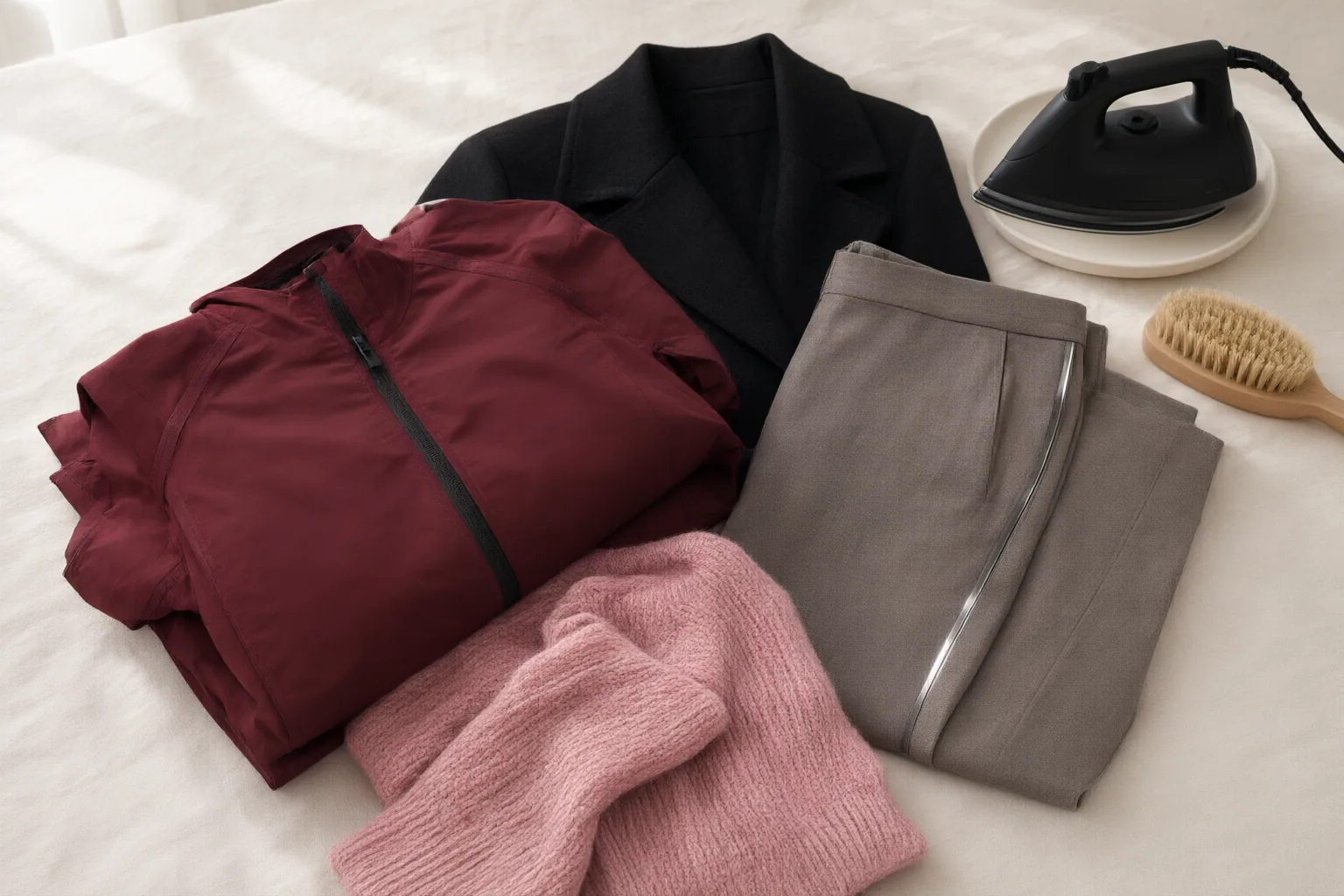
Read the entire care label before choosing a cycle. Its garment-specific limits—not a universal laundry habit—should guide washing temperature, drying, ironing, bleaching, and dry cleaning, with extra attention to functional or heat-sensitive details.
Start With the Care Label
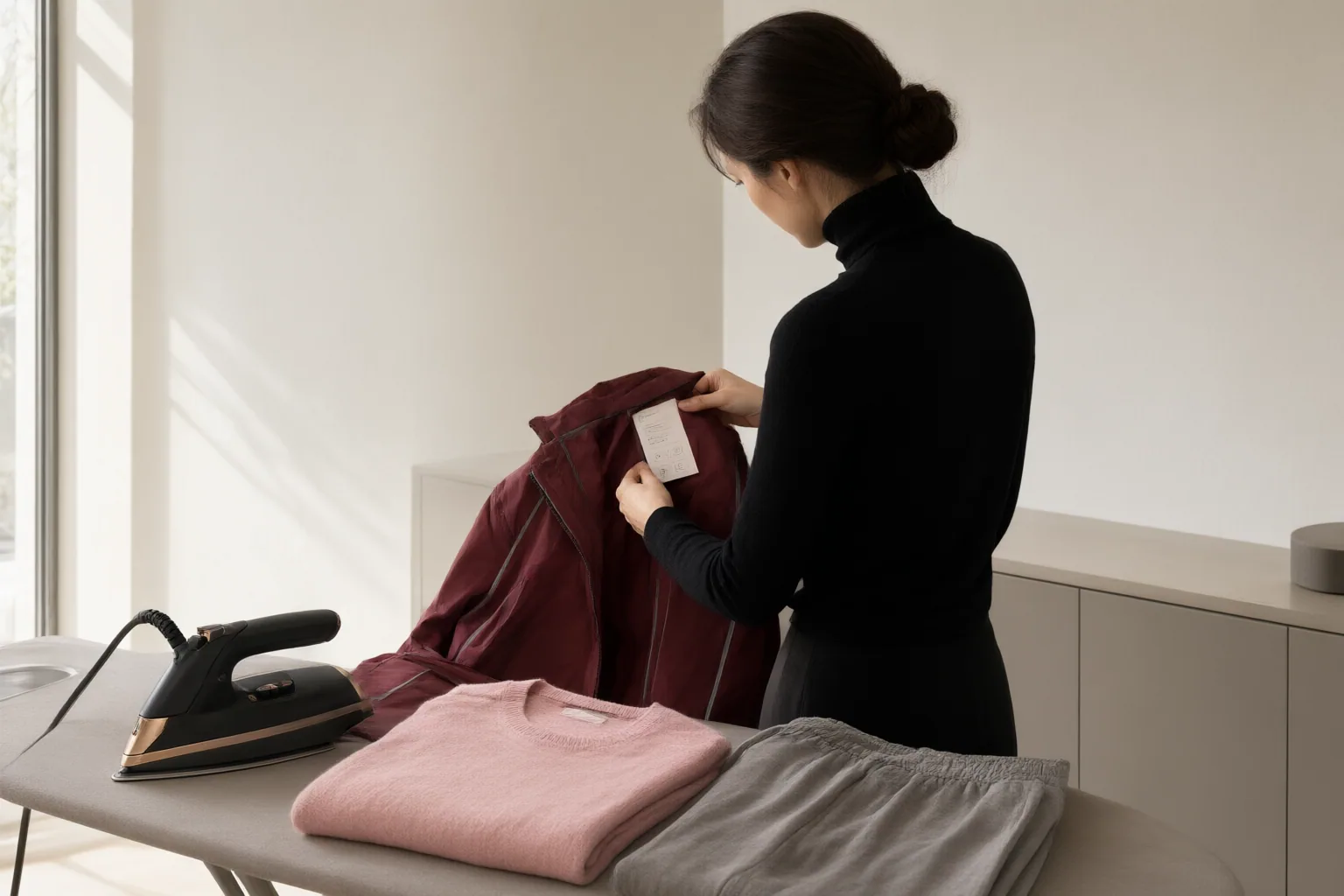
Begin by identifying every instruction on the label: the permitted washing method and temperature, drying method, ironing temperature, dry-cleaning guidance, and whether bleach is allowed. Fiber composition may appear alongside these directions, but it does not replace them. In the United States, care instructions are required in text under the FTC Care Label Rule, although symbols may also be included.
Treat the listed limits as boundaries for that particular garment. Before washing, scan beyond the temperature setting for restrictions on tumble drying, bleach, or ironing. If your usual routine conflicts with the label, follow the garment-specific instruction. This simple check prevents a familiar habit—such as automatically using high heat—from overriding documented care limits.
Adjust Washing for Fibers, Construction, and Function
A fiber name offers useful context, but it does not fully predict how a garment behaves. Polyester, for example, can be woven or knitted, producing different degrees of stretch, structure, and drape. Read the label and consider the garment’s construction and functional features together.
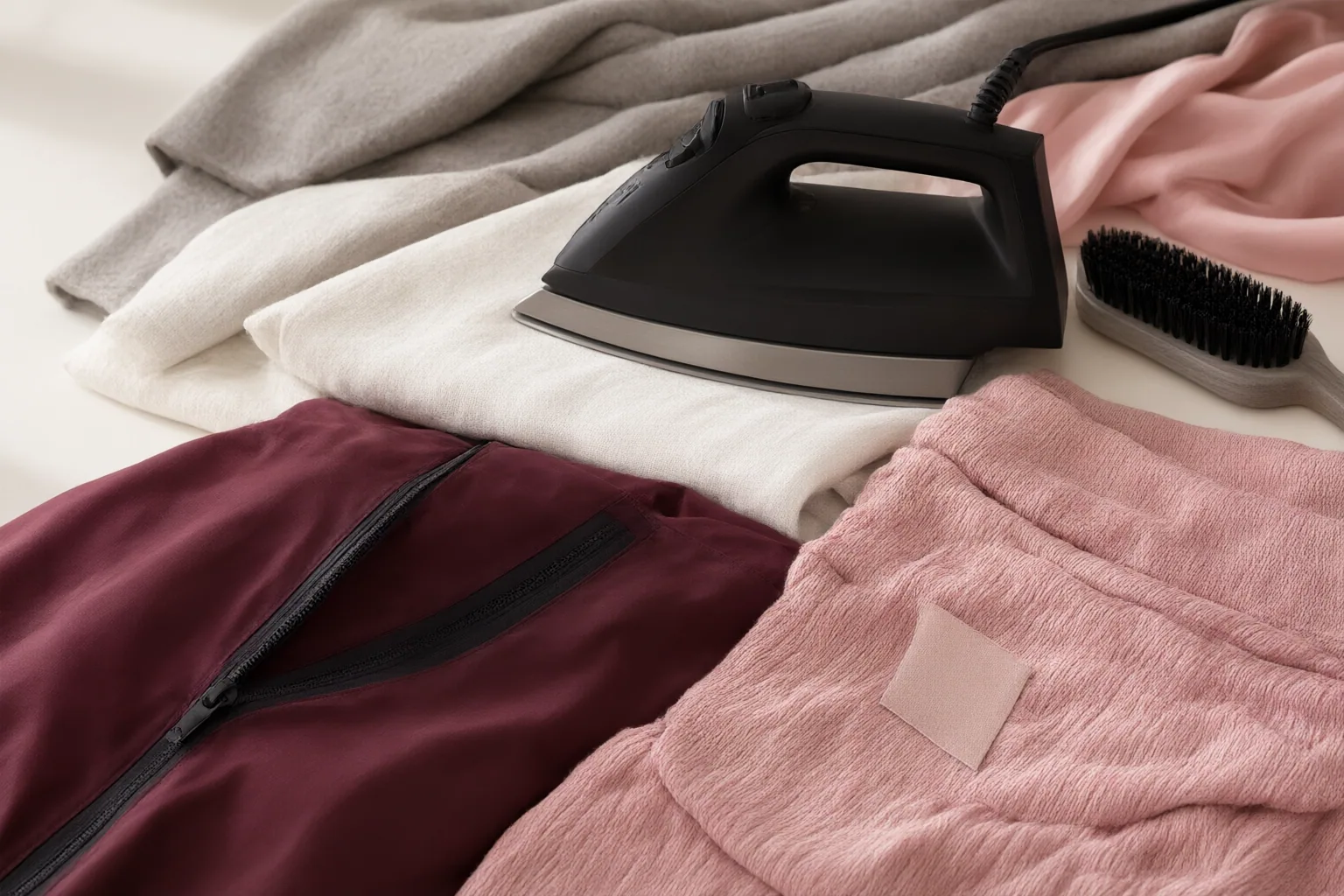
For workwear containing elastane, the cited guidance recommends gentler spinning and a maximum spin speed of 1,000 revolutions per minute. It also recommends closing zippers before washing to protect both the fastener and other items in the load. Fabric softener is not a neutral default: accumulated softener can reduce moisture absorption, so the workwear source advises avoiding it when breathability and absorbency are important functions.
Outdoor garments may require another distinction. The cited product guidance separates routine washing, restoration of water repellency, and washing functional base layers into different care purposes. It describes detergent suitable for materials including GORE-TEX membranes and products intended to preserve breathability. Check which task the garment actually needs rather than treating every functional layer with the same product or cycle.
Choose Drying and Ironing Methods Carefully
After washing, return to the label instead of assuming the garment can enter the dryer. The workwear guidance warns that tumble-dryer heat and mechanical action can damage fibers, particularly elastic fibers, and presents air drying as a gentler alternative for the garments it covers. Use air drying when it is permitted and better suited to the garment’s construction; otherwise, remain within the label’s drying limits.
Apply the same approach to ironing. Confirm the maximum permitted temperature and inspect the garment for components that react differently from the main fabric. Reflective elements should not be ironed: the cited guidance says heat can melt or deform them and impair their reflective function. A garment may therefore permit ironing generally while still requiring you to avoid a specific trim or panel.
Conclusion
Use a repeatable pre-laundry check: read the complete label, note its temperature and method limits, then identify elastic fibers, reflective details, zippers, breathable membranes, and other functional construction. Close zippers where appropriate, and distinguish ordinary cleaning from water-repellency restoration or base-layer care. Fiber composition is context, not permission to ignore garment-specific directions. Before your next wash, sort out items with special features and choose the gentlest washing, drying, and ironing settings the respective labels permit.
Disclosures and limitations
- This article was prepared with AI assistance and edited from the research sources identified by the source IDs; it does not claim hands-on testing or personal product use.
- No products are recommended here. If future commerce links are added, any affiliate relationship should be clearly disclosed and should not replace verification of current care guidance.
Related reading
Sources
- Sada Grangers Clothing Care Kit – SKLADEM | Hudy.cz — Hudy.cz
- Reklamní trička a textil Adler | potisk a výšivka | ONLINE-TEXTIL.CZ — ONLINE-TEXTIL.CZ
- High-Quality Jackets for Women | Manufactum — manufactum
- Robot or human? — walmart.com
- Guide to Care Labels for Fashion Brands — Silk PLM
- Polyester Fabric: Complete Guide to Types, Weaves, Characteristics, Uses & Care – Polyester Staple Fiber Partners from Asia – VNPOLYFIBER — Polyester Staple Fiber Partners from Asia – VNPOLYFIBER
- How to extend the lifespan of workwear — canis.cz