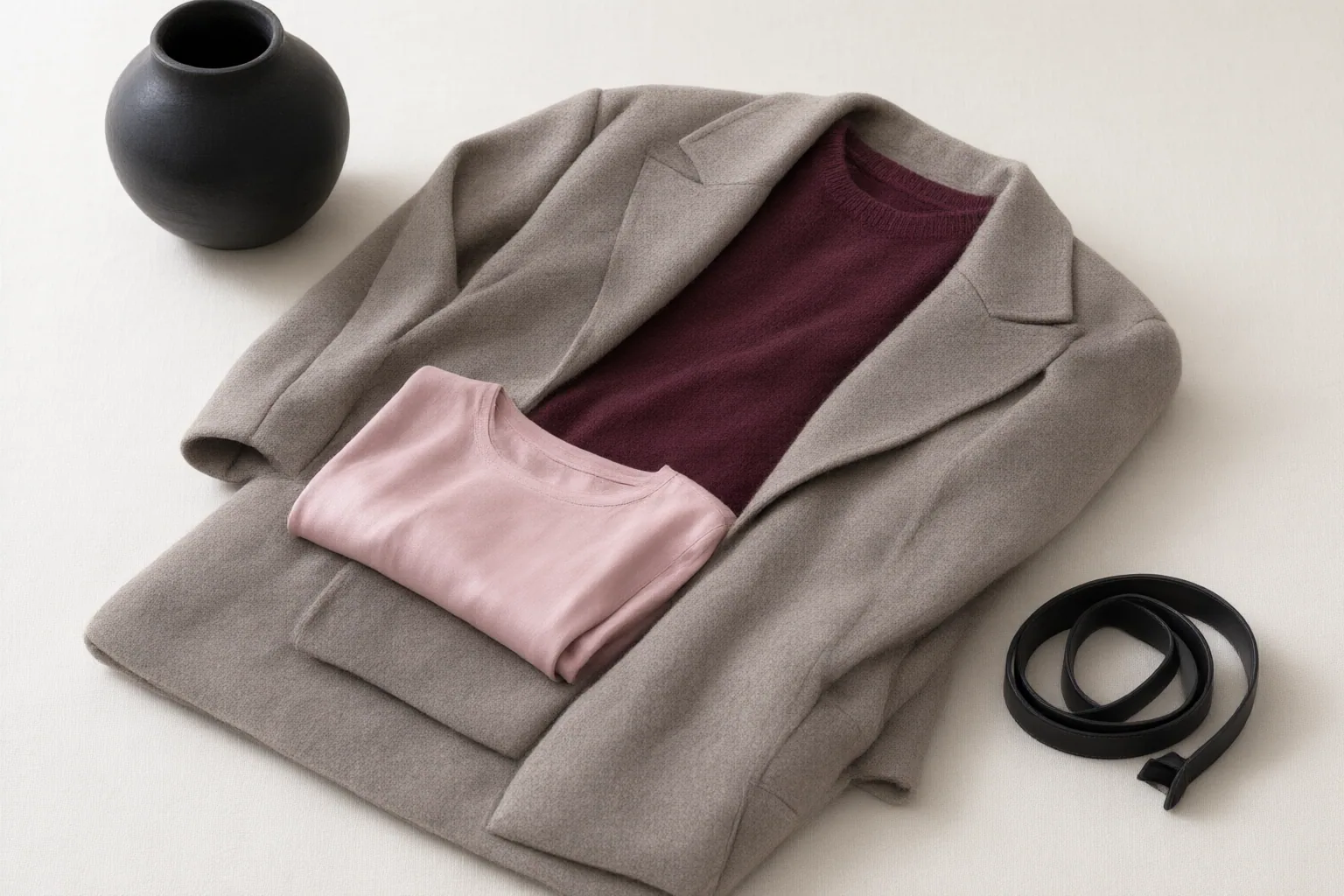
The three-layer formula separates moisture management, warmth, and weather protection, making an outfit easier to adjust as conditions or activity levels change.
Why a Three-Layer Formula Helps in Changing Weather
A traditional layering system uses several lighter pieces that can be worn separately or combined. Compared with relying on a few heavy garments, this structure makes it easier to add or remove clothing when the weather shifts or activity intensity changes.
The framework comes from an outdoor clothing guide. Applying it to everyday city dressing is an editorial translation of its functional logic, not evidence that a particular urban look is currently trending. Its practical value is straightforward: assign each layer a job, then adjust the combination instead of expecting one garment to handle every condition.
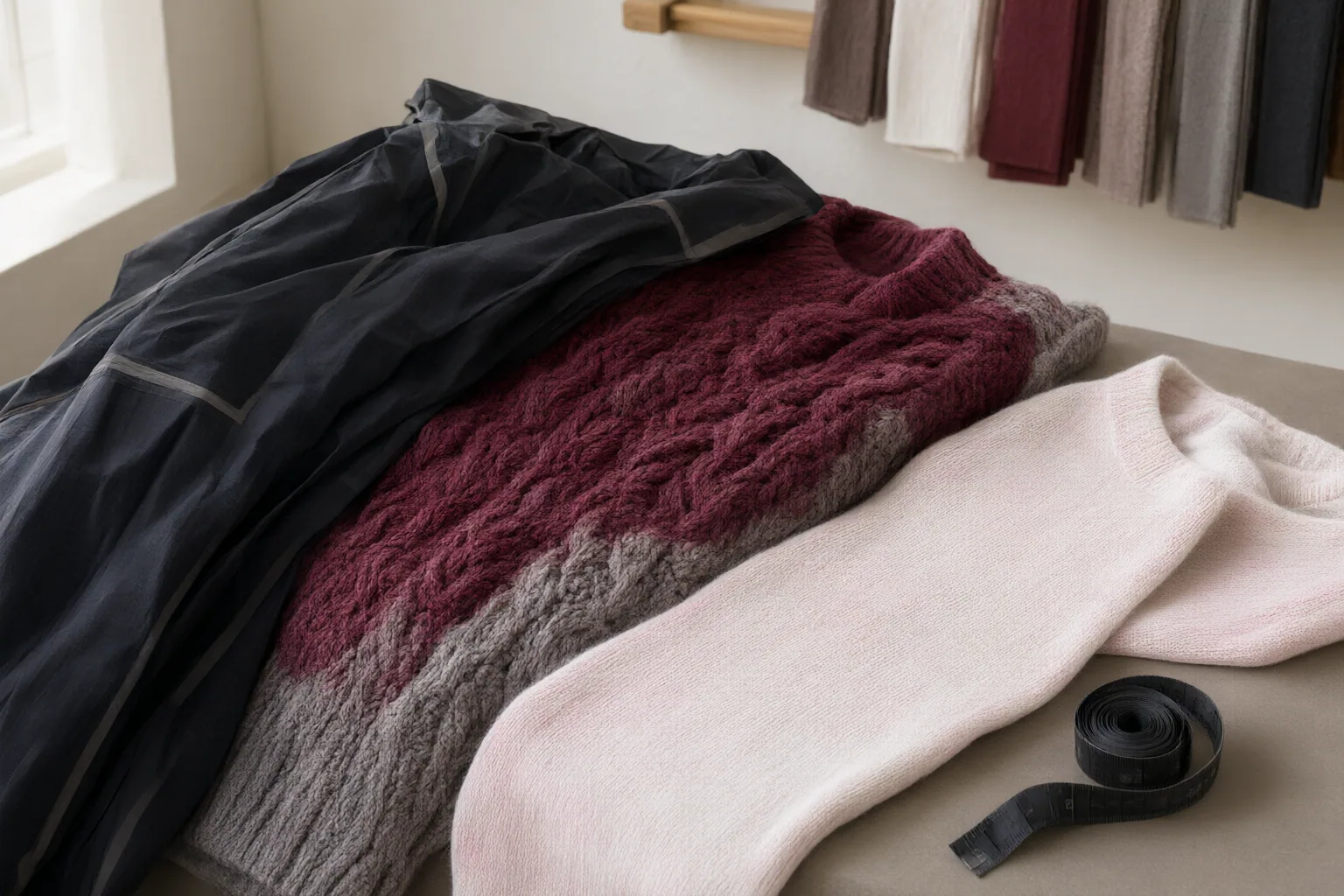
Base, Mid, and Outer Pieces: What Each Layer Does
The base layer sits next to the skin. Its main role is to manage moisture by moving sweat away from the skin, while remaining comfortable in close contact with the body.
The mid layer retains body heat but should also allow moisture from perspiration to continue moving outward. In functional terms, it needs to balance warmth and breathability rather than simply adding as much insulation as possible.
The outer layer protects the layers underneath from wind, rain, and snow. The cited guide distinguishes hard-shell and soft-shell choices, with the appropriate option depending on the day’s conditions. The available evidence does not support extending these roles into specific fabric, brand, or product claims. For everyday use, treat the three categories as a checklist: moisture management closest to the body, adjustable warmth in the middle, and condition-appropriate protection outside.

Turn the Layering System into an Everyday Wardrobe Formula
Start by identifying three core pieces you already wear most often when you want to feel put together. Then test how those pieces can participate in a base, mid, and outer combination. They do not all need to appear in every outfit; the purpose is to create a repeatable structure that can be adjusted for weather and activity.
Check fit across the complete combination, not only garment by garment. The cited wardrobe advice uses naturally aligned shoulders, clean trouser breaks, and the absence of pulling or bunching as useful indicators. Also confirm that one layer does not make another sit awkwardly.
These wardrobe and fit suggestions come from an attributable LinkedIn source describing personal guidance, not independently verified outcomes. Use them as practical inspection prompts alongside the functional layering principles, rather than as proof that one formula works identically for everyone.
Conclusion
Build the outfit in two passes. First, consider the expected conditions and activity level, then decide which moisture-management, warmth, and protective functions are needed. Second, assemble those functions from your existing core pieces and inspect the overall fit.
Only create a shopping list when this test reveals a genuine gap. Before adding anything, confirm that it can work with clothing you already own. Now choose three frequently worn pieces, assemble one layered outfit, and record any problem involving weather protection, warmth, moisture management, or fit.
Disclosures and limitations
- This article was prepared with AI assistance from the supplied Mountain Equipment layering guide and an attributable LinkedIn wardrobe source. The city-wear application is editorial interpretation, and the LinkedIn guidance has not been independently verified.
- No products, prices, inventory claims, or affiliate recommendations are included because the supplied research contained no qualified product data.
Related reading
Sources
- Finding Professional Clothing That Fits Well — linkedin.com
- Layering Guide | Mountain Equipment — Mountain Equipment