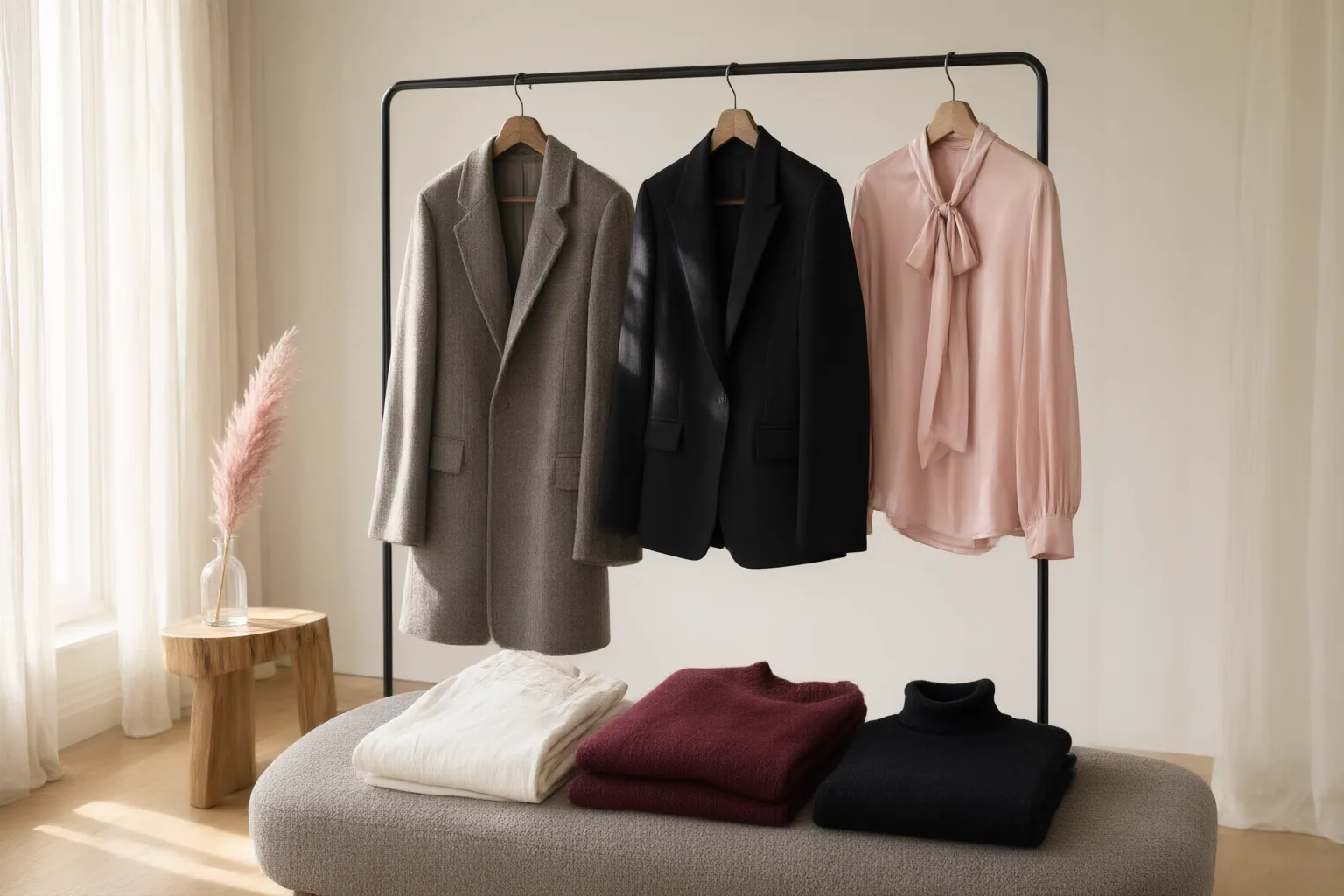
Start with the clothes that already fit, suit your current routine, and get regular wear. Their recurring colors can form a working palette; test it under different lighting and for a full week before deciding that anything is missing.
Audit the Clothes You Already Own
Begin with an inventory, not a shopping list. Pull out the clothes you wear frequently and separate them from pieces that no longer fit, no longer suit your lifestyle, or remain unused. Then sort the less useful group into practical next steps such as repair, resale, donation, or reconsideration.
This process makes the usable part of the wardrobe easier to see. It also helps distinguish a genuine color gap from a broader fit or lifestyle problem: another top in a supposedly useful shade will not solve an outfit if the existing bottoms are uncomfortable or inappropriate for your routine.
The categories come from a commercial styling-service workflow, not a universally validated system. Treat them as flexible prompts. The aim is to identify what currently works rather than force every garment into a rigid formula.
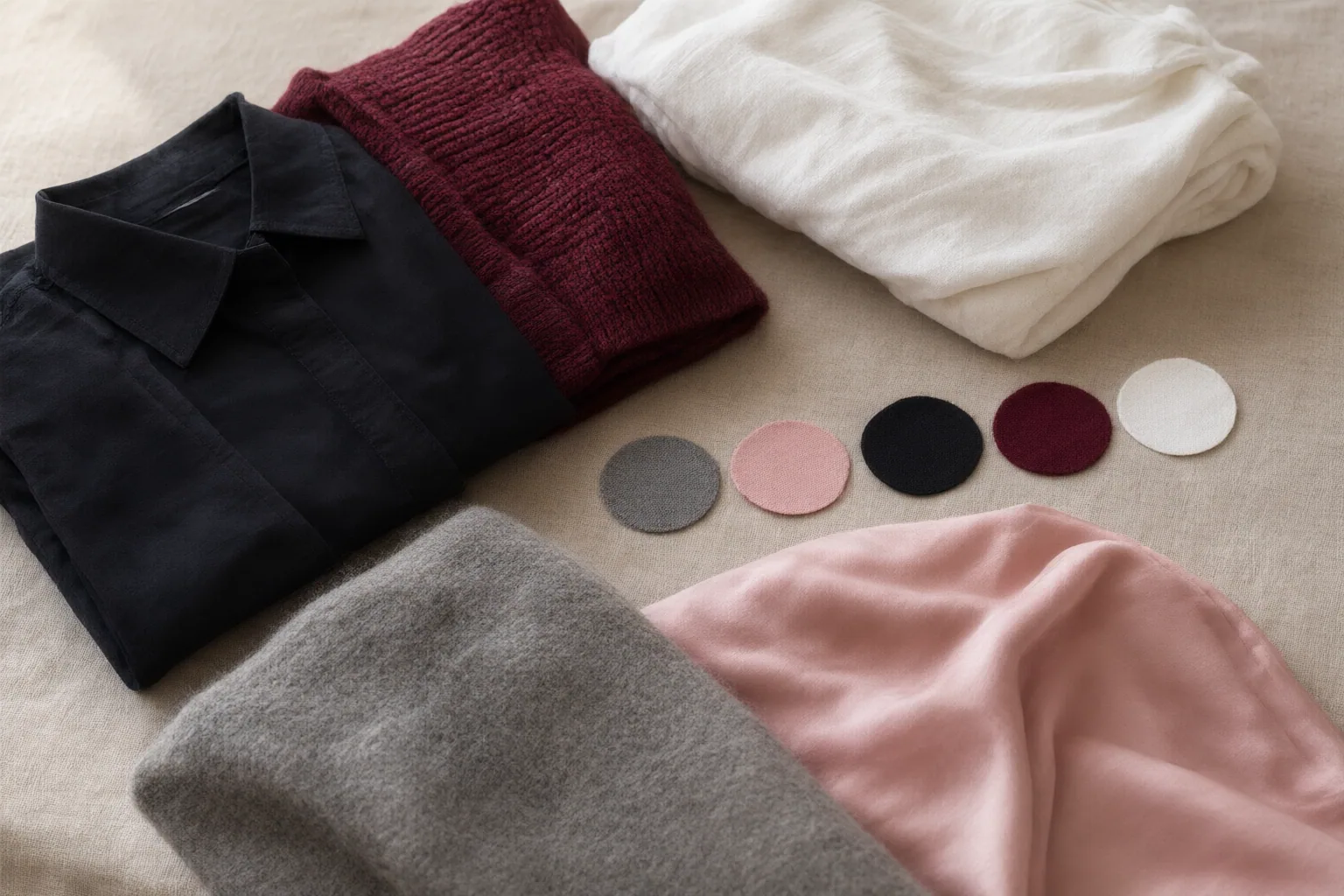
Extract a Practical Palette From Repeat-Wear Pieces
Lay out or photograph the well-fitting pieces you wear most. Group visually similar colors together, then note which shades recur across categories such as tops, bottoms, outerwear, shoes, bags, and accessories. Recurring colors that already combine easily can serve as foundation colors; less frequent shades can remain accents.
This foundation-and-accent structure is editorial guidance, not a proven universal formula or a personal-color diagnosis. Judge every candidate color by evidence from your own wardrobe: Does it appear in clothes suited to your actual schedule? Can it connect several existing pieces? Is it concentrated in a category you rarely use?
Create a simple outfit matrix before buying. For each proposed foundation or accent, list the existing garments it can accompany. A color with several realistic combinations is more useful than one supported by a single aspirational outfit. When a gap remains, evaluate any future purchase against fit, lifestyle, budget, and compatibility with clothes already owned—the considerations identified by the styling source.

Check Every Color in More Than One Light
Color judgments depend partly on the viewing environment. The lighting source notes that the same light can interact differently with different finishes, while daylight, nearby-room lighting, and surrounding materials can all affect how colors appear. A garment that seems compatible inside a wardrobe may therefore look different beside a window or in another room.
Compare the actual clothes rather than relying only on memory or screen images. View likely combinations where the garments are stored, in daylight when available, and under lighting similar to the places where you expect to wear them. Photographing each arrangement can help you compare results, although the photograph itself is another representation rather than definitive proof of color.
Do not search for one supposedly perfect bulb setting. The source says color temperature should reflect the full palette and intended use, and that no single setting suits every style. It also cautions that a color-rendering index is only one input; by itself, it cannot establish overall lighting quality or product superiority.
Conclusion
Turn your observations into a restrained gap list. Keep the colors that repeatedly support wearable combinations, and pause purchases that merely duplicate categories or shades you seldom use. Consider adding something only when it fills a specific outfit need and works with the draft palette, current lifestyle, fit requirements, budget, and several existing garments.
These steps synthesize guidance from a styling service and a wardrobe-lighting company. Both are commercial sources rather than independent academic research, so they support a practical process but do not prove that it will work universally.
Now photograph your most-worn clothes in daylight, mark their recurring colors, and build a draft palette. Wear outfits from it for one week before adding anything to your shopping list.
Frequently asked questions
How many colors should a wardrobe palette include?
The supplied sources do not establish an ideal number. Start with the recurring colors in well-fitting, frequently worn clothes, then retain only the foundation and accent shades that create realistic combinations for your lifestyle.
Is daylight enough for checking wardrobe colors?
No single viewing condition is conclusive. Compare actual garments in daylight and under the lighting where they are stored or commonly worn, while accounting for nearby lighting and surrounding materials.
Disclosures and limitations
- This article was prepared with AI assistance using only the supplied commercial styling-service and wardrobe-lighting sources. It contains no product selection or affiliate recommendation; any future shopping decision should be independently checked for price, availability, and suitability.
Related reading
Sources
- Bespoke Wardrobe Lighting Design Guide | Modenese — Modenese Bespoke
- Wardrobe Makeover includes Closet Audit & Personal Shopping — Style Fix Studio – Transform your look, transform your life